
ASTM A105 forged fittings are carbon steel components widely used in piping systems that operate under high pressure and temperature conditions. These fittings are manufactured through the forging process, which improves grain structure and enhances mechanical strength. ASTM A105 is specifically intended for forged carbon steel piping components used in ambient and high-temperature services. Due to their durability and reliability, these fittings are commonly installed in critical industrial applications. They provide excellent resistance to stress, pressure, and mechanical loads. ASTM A105 fittings are available in various shapes and sizes to suit different pipeline requirements. Their consistent quality makes them a preferred choice across industries.
The forging process used for ASTM A105 fittings involves shaping heated steel under compressive forces. This method eliminates internal voids and refines the metal’s grain flow, resulting in superior strength compared to cast fittings. Forged fittings offer enhanced fatigue resistance and improved impact strength. ASTM A105 forged fittings are typically produced as elbows, tees, couplings, unions, plugs, caps, and bushings. Their dense structure ensures better performance in demanding service conditions. The forging process also improves dimensional accuracy. As a result, these fittings ensure leak-free and long-lasting connections.
ASTM A105 forged fittings are governed by ASTM A105/A105M standards, which define chemical composition, mechanical properties, and heat treatment requirements. The standard ensures uniformity and quality across manufacturers. These fittings are usually supplied in normalized, annealed, or hot-forged conditions. Heat treatment enhances toughness and relieves internal stresses. Compliance with ASTM standards guarantees that the fittings meet stringent industrial specifications. This makes them suitable for use in pressure-retaining parts. Certification and test reports further assure reliability.
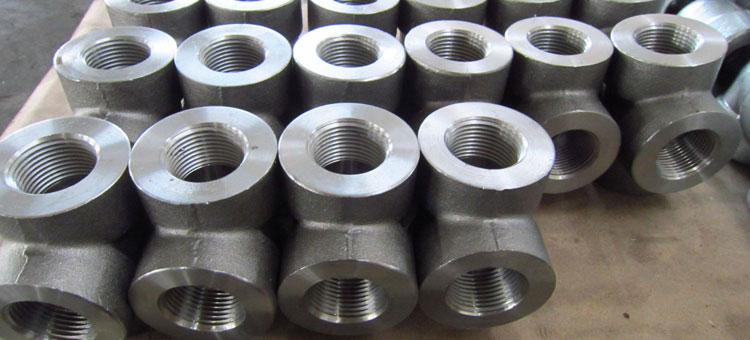
The chemical composition of ASTM A105 includes carbon, manganese, silicon, sulfur, and phosphorus within controlled limits. Carbon content provides the necessary strength and hardness. Manganese improves tensile strength and wear resistance. Silicon enhances deoxidation during steelmaking. Sulfur and phosphorus are kept at low levels to maintain ductility and toughness. This balanced chemical composition ensures excellent weldability. It also allows the fittings to perform efficiently under fluctuating temperatures. The controlled chemistry contributes to long service life.
Mechanical properties of ASTM A105 forged fittings include high tensile strength, yield strength, and good elongation. These properties enable the fittings to withstand internal pressure and external mechanical loads. Typical tensile strength ranges around 485 MPa, ensuring robustness. Yield strength provides resistance against permanent deformation. Elongation values indicate good ductility, allowing the fittings to absorb stress without cracking. Impact resistance further enhances safety. These mechanical characteristics make ASTM A105 fittings dependable for critical applications.
ASTM A105 forged fittings are commonly used in oil and gas pipelines where pressure and temperature conditions are severe. They are suitable for refineries, petrochemical plants, and offshore platforms. Their ability to handle high-pressure fluids makes them ideal for transmission lines. These fittings also perform well in power generation systems, including boilers and heat exchangers. Their reliability reduces maintenance requirements. This ensures uninterrupted operations. Consequently, they are a vital component in energy infrastructure.
| Specification – ASTM A105 Forged Fittings | |
|---|---|
| Standard | ASTM A105 / A105M |
| Material Type | Forged Carbon Steel |
| Manufacturing Process | Closed Die Forging / Open Die Forging |
| Product Forms | Elbow, Tee, Cross, Coupling, Union, Plug, Cap, Bushing |
| Size Range | 1/8” NB to 4” NB |
| Pressure Class | Class 2000, 3000, 6000, 9000 |
| Connection Types | Threaded (NPT/BSP), Socket Weld |
| Dimensional Standards | ASME B16.11, ASME B16.5 (where applicable) |
| Heat Treatment | As Forged, Normalized, Annealed |
| Temperature Range | Up to 425°C (800°F) |
| Surface Finish | Black, Galvanized, Anti-Rust Coating |
| Testing | Chemical Analysis, Mechanical Test, Hardness Test |
| Inspection | Visual, Dimensional, NDT (Optional) |
| Certification | Mill Test Certificate (MTC) as per EN 10204 3.1 |
| Applications | Oil & Gas, Petrochemical, Power Plant, Refineries, Water Systems |
In the petrochemical and chemical processing industries, ASTM A105 forged fittings play a crucial role. They are used in piping systems that transport chemicals, steam, and hydrocarbons. Their resistance to pressure and thermal stress ensures safe fluid handling. These fittings maintain integrity even under cyclic loading conditions. Their uniform microstructure reduces the risk of failure. Compatibility with various pipe materials adds to their versatility. As a result, they are widely adopted in chemical plants.
ASTM A105 forged fittings are also extensively used in water treatment and desalination plants. They are suitable for high-pressure water lines and pumping systems. The forged construction provides excellent resistance to erosion and vibration. These fittings ensure secure connections in municipal and industrial water pipelines. Their durability minimizes leakage risks. They can withstand frequent pressure fluctuations. This reliability contributes to efficient and safe water distribution systems.
One of the major advantages of ASTM A105 forged fittings is their excellent weldability. They can be easily welded using standard welding procedures. Preheating and post-weld heat treatment may be applied when required. Good weldability ensures strong and defect-free joints. This simplifies installation and maintenance processes. Welded connections enhance pipeline strength. As a result, ASTM A105 fittings integrate seamlessly into complex piping networks.
| Chemical Composition – ASTM A105 Forged Fittings | |
|---|---|
| Element | Composition (%) |
| Carbon (C) | 0.35 max |
| Manganese (Mn) | 0.60 – 1.05 |
| Phosphorus (P) | 0.035 max |
| Sulfur (S) | 0.040 max |
| Silicon (Si) | 0.10 – 0.35 |
| Copper (Cu) | 0.40 max |
| Nickel (Ni) | 0.40 max |
| Chromium (Cr) | 0.30 max |
| Molybdenum (Mo) | 0.12 max |
| Vanadium (V) | 0.08 max |
| Mechanical Properties – ASTM A105 Forged Fittings | |
|---|---|
| Property | Value |
| Tensile Strength | 485 MPa (70,000 psi) min |
| Yield Strength | 250 MPa (36,000 psi) min |
| Elongation | 22% min |
| Reduction of Area | 30% min |
| Hardness | 187 HB max |
| Impact Test | Not Mandatory (If Required by Specification) |
| Heat Treatment Condition | As Forged / Normalized / Annealed |
| Test Temperature | Room Temperature |
| Dimension Chart – ASTM A105 Forged Fittings (ASME B16.11) | |||||
|---|---|---|---|---|---|
| Nominal Size (NB) | Outside Diameter (OD) | Socket Depth (A) | Center to End (C) | Wall Thickness (t) | Approx. Weight (kg) |
| 1/8" | 10.3 mm | 9.5 mm | 14 mm | 4.6 mm | 0.05 |
| 1/4" | 13.7 mm | 9.5 mm | 18 mm | 5.6 mm | 0.08 |
| 1/2" | 21.3 mm | 12.7 mm | 26 mm | 7.0 mm | 0.20 |
| 3/4" | 26.7 mm | 12.7 mm | 30 mm | 7.6 mm | 0.30 |
| 1" | 33.4 mm | 15.9 mm | 38 mm | 8.6 mm | 0.55 |
| 1 1/2" | 48.3 mm | 19.1 mm | 50 mm | 10.2 mm | 1.10 |
| 2" | 60.3 mm | 22.2 mm | 62 mm | 11.1 mm | 1.80 |
| 3" | 88.9 mm | 25.4 mm | 80 mm | 13.5 mm | 3.80 |
| 4" | 114.3 mm | 28.6 mm | 95 mm | 15.2 mm | 6.50 |
| Equivalent Grades – ASTM A105 Forged Fittings | ||
|---|---|---|
| Standard | Grade / Designation | Equivalent / Comparable Material |
| ASTM | A105 / A105M | Carbon Steel Forgings for Piping Applications |
| ASME | SA 105 | ASME Boiler & Pressure Vessel Code Equivalent |
| EN | EN 10222-2 P250GH | Pressure Vessel Steel Forgings |
| DIN | DIN 1.0460 | C22.8 Carbon Steel Forging |
| BS | BS 970 150M19 | Carbon Steel Forged Grade |
| IS | IS 1875 Class 2 | Indian Standard Carbon Steel Forging |
| JIS | JIS G4051 S25C | Medium Carbon Steel Forging |
| GB | GB/T 699 20# | Chinese Carbon Steel Forging Grade |
ASTM A105 Forged Fittings are high-quality carbon steel fittings manufactured for high-temperature and high-pressure service. They are widely used in piping systems for oil, gas, and chemical industries. These fittings provide excellent strength, durability, and corrosion resistance.
The ASTM A105 standard covers forged fittings such as elbows, tees, reducers, caps, and couplings. These fittings come in different shapes, sizes, and pressure ratings to meet various piping requirements.
ASTM A105 Forged Fittings mainly consist of carbon, manganese, phosphorus, sulfur, silicon, and trace elements. The chemical composition ensures high mechanical strength and suitability for heat treatment.
These fittings have excellent tensile strength, yield strength, and hardness. They can withstand high pressure and temperature conditions, making them ideal for critical applications in refineries, power plants, and pipelines.
Yes, ASTM A105 Forged Fittings are suitable for welding. Proper welding procedures and preheating are recommended to prevent cracking and ensure long-lasting joints.
These fittings are available in various pressure classes including 150#, 300#, 600#, 900#, and 1500# as per ASME B16.5 standards. Selection depends on the application, temperature, and operating pressure.
ASTM A105 Forged Fittings are available in sizes ranging from ½ inch to 48 inches in diameter, covering a wide range of piping system requirements.
While ASTM A105 is a carbon steel material, it is not highly resistant to corrosion. For corrosive environments, proper coatings, galvanization, or using alloy steel alternatives is recommended.
These fittings undergo rigorous testing, including hydrostatic testing, radiographic inspection, ultrasonic testing, and dimensional checks to ensure compliance with ASME and ASTM standards.
Industries such as oil & gas, petrochemical, power generation, shipbuilding, and chemical processing extensively use ASTM A105 Forged Fittings for critical piping systems due to their reliability and strength.
We export steel pipes and tubes to over 60 countries worldwide, serving clients across Asia, Europe, the Middle East, Africa, Oceania, and the Americas. Our strong global logistics network ensures reliable delivery, quality assurance, and compliance with international standards.
Export Destinations Include:
Afghanistan, Albania, Andorra, Angola, Austria, Australia, Bahrain, Bangladesh,
Bhutan, Brazil, Brunei, Belarus, Belgium, Bulgaria, Cambodia, China, Cyprus,
Croatia, Czech Republic, Canada, Denmark, Estonia, Egypt, Finland, France,
Germany, Greece, Georgia, Hungary, Iceland, Ireland, Italy, Indonesia, Iran,
Iraq, Israel, Japan, Jordan, Kazakhstan, Kuwait, Kyrgyzstan, Lebanon, Latvia,
Latin America, Liechtenstein, Lithuania, Luxembourg, Malta, Madagascar, Mexico,
Moldova, Monaco, Malaysia, Maldives, Mongolia, Myanmar (Burma), Nepal,
New Zealand, North Korea, Netherlands, Norway, Nigeria, Oman, Poland, Portugal,
Pakistan, Palestine, Philippines, Qatar, Russia, Romania, San Marino,
Serbia and Montenegro, Slovakia, Slovenia, Spain, Sweden, Switzerland,
Saudi Arabia, Singapore, South Korea, South Africa, Sri Lanka, Sudan, Syria,
Taiwan, Tanzania, Tajikistan, Thailand, Turkey, Turkmenistan, Ukraine,
United Kingdom, United Arab Emirates (UAE), Uzbekistan, Venezuela, Vietnam,
Yemen, and more.

