
ASTM A182 F11 screwed and forged fittings are high-performance alloy steel components designed for high-pressure and high-temperature piping systems. They are widely used in power plants, petrochemical, oil & gas, and industrial applications due to their strength, durability, and corrosion resistance. F11 fittings are forged to ensure uniform grain structure and mechanical reliability. Screwed fittings provide easy installation in small-diameter pipelines without welding. Common types include elbows, tees, reducers, caps, and couplings. These fittings comply with strict dimensional and ASTM standards. They are engineered to resist thermal stress, creep, and pressure variations. F11 fittings are ideal for critical industrial piping systems.
ASTM A182 F11 fittings are made from chromium-molybdenum alloy steel with low carbon content, approximately 0.05–0.15% C, 1% Cr, and 0.5% Mo. This composition provides high-temperature strength, oxidation resistance, and corrosion resistance. The addition of manganese, silicon, and trace elements enhances toughness and weldability. Forging ensures dense, defect-free fittings suitable for high-pressure applications. Screwed fittings allow quick assembly and disassembly. F11 alloy can withstand temperatures up to 540°C (1000°F). The fittings resist creep, scaling, and stress corrosion cracking. They provide long-term durability in critical industrial pipelines.
F11 fittings are manufactured by forging high-quality steel billets under high pressure, followed by normalization and tempering to achieve desired mechanical properties. Screwed fittings are threaded to ensure tight, leak-proof connections. Quality checks include dimensional inspections, ultrasonic testing, and magnetic particle inspection. Machining and surface finishing ensure smooth, precise surfaces. Heat treatment improves hardness, strength, and toughness. Fittings are tested for tensile strength, hardness, and impact toughness. Compliance with ASTM A182 and ASME B16.11 standards is maintained. The process guarantees reliable performance under high temperature and pressure.
F11 fittings comply with ASTM A182 for alloy steel materials and ASME B16.11 for screwed and socket-welded fittings. International equivalents include EN 10222-2, DIN 1.7357, JIS S11C, and GB 1CrMoV. Fittings undergo chemical, mechanical, and non-destructive testing to ensure quality. Dimensional inspections verify compliance with ASTM standards. Traceability is maintained through heat treatment and material certification. F11 fittings meet pressure and temperature requirements for industrial, power, and petrochemical applications. Compliance ensures safety and interchangeability in piping systems. Quality assurance prevents premature failure and operational downtime.
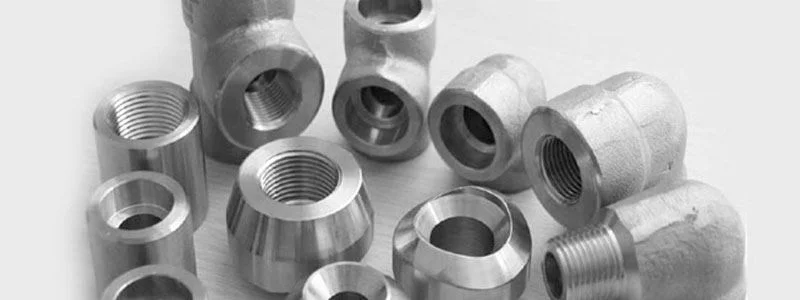
ASTM A182 F11 fittings come in a variety of types and sizes. These include elbows (90° and 45°), tees, reducers, caps, couplings, and bushings. They are available in nominal pipe sizes from ½ inch to 24 inches. Screwed fittings are suitable for smaller-diameter pipelines, while forged fittings are preferred for high-pressure, high-temperature systems. Custom fittings can be fabricated to meet specific engineering requirements. F11 fittings provide versatility across industrial applications. The range ensures compatibility with multiple piping systems. Their high performance makes them reliable for critical operations.
ASTM A182 F11 fittings provide excellent mechanical strength and toughness. Typical tensile strength ranges from 415–550 MPa, and yield strength is ≥ 240 MPa. Elongation is ≥ 20%, and reduction of area is ≥ 35%. Brinell hardness ranges from 170–210 HB. Impact toughness is ≥ 41 J at room temperature. F11 fittings maintain mechanical integrity at temperatures up to 540°C (1000°F). They resist creep and fatigue under continuous operation. Testing ensures fittings meet ASTM A182 mechanical requirements. These properties make them suitable for high-pressure, high-temperature piping systems.
F11 alloy steel provides moderate corrosion resistance due to chromium and molybdenum content. The fittings resist oxidation, scaling, and sulfidation in high-temperature environments. Proper finishing and insulation enhance durability. Screwed fittings minimize leak paths, ensuring system safety and efficiency. F11 fittings are suitable for steam, water, and hydrocarbon lines in industrial and power plant applications. They reduce maintenance requirements and long-term operational costs. The material ensures reliable service in aggressive environments. They are widely used in high-pressure and high-temperature piping networks.
Forged F11 fittings provide high strength, toughness, and uniform grain structure. Forging eliminates internal defects and improves reliability under pressure and temperature. They are durable and suitable for high-pressure industrial pipelines. Non-destructive testing can easily verify their integrity. Forged F11 fittings offer long-term safety, minimal maintenance, and consistent performance. They resist creep, fatigue, and thermal stress. Forged designs are preferred in critical applications over cast fittings. ASTM A182 F11 forged fittings are a reliable choice for industrial piping systems.
| Property | Requirement / Value |
|---|---|
| Standard | ASTM A182 |
| Grade | F11 |
| Material Type | Chromium-Molybdenum Alloy Steel (Low Carbon) |
| Form | Forged and Screwed Fittings |
| Dimensions | ASME B16.11 / ASME B16.9 standards |
| Pressure Rating | Up to 2500 psi (depends on size and fitting type) |
| Temperature Range | -29°C to 540°C (-20°F to 1000°F) |
| Heat Treatment | Normalized and Tempered |
| Mechanical Testing | Tensile Test, Hardness Test, Impact Test as per ASTM A182 |
| Non-Destructive Testing (NDT) | Ultrasonic, Radiographic, Magnetic Particle, Dye Penetrant (as required) |
| Applications | High-pressure and moderate high-temperature piping systems in power plants, petrochemical, oil & gas, and industrial industries |
F11 fittings are commonly used in thermal, fossil, and nuclear power plants. They are ideal for high-pressure steam lines, superheated and reheated steam pipelines, and boiler systems. The fittings resist thermal stress, creep, and mechanical fatigue. Screwed fittings allow easy maintenance in smaller-diameter pipelines. Forged fittings ensure maximum durability and reliability in critical systems. F11 is preferred over standard carbon steel for high-temperature service. These fittings support turbines, heat exchangers, and condensate systems. Their reliability reduces operational downtime.
In refineries and chemical plants, F11 fittings handle high-pressure steam, hydrocarbons, and chemical fluids. They resist oxidation, scaling, and thermal stress. Screwed fittings allow flexible installation in tight spaces. F11 fittings ensure long-term performance in continuous operation. The alloy steel provides corrosion resistance and mechanical strength. They are suitable for critical pipelines where leaks or failure could be hazardous. The fittings meet international standards for chemical processing. F11 fittings reduce maintenance and extend system life. They are widely used in industrial process pipelines.
F11 fittings are used in upstream, midstream, and downstream pipelines. They handle moderate high pressure and high-temperature fluids. Forged fittings offer superior strength compared to cast alternatives. Screwed fittings provide easy assembly in confined or remote areas. F11 fittings resist creep, fatigue, and scaling. They are suitable for hydrocarbon pipelines, refineries, and gas processing units. The alloy ensures safe operation under continuous service. F11 is a preferred choice for industrial piping requiring moderate high-temperature performance. These fittings are critical for operational reliability.
Screwed F11 fittings provide easy installation, flexibility, and cost efficiency. Precision threads ensure tight connections without welding. They are ideal for small-diameter pipelines and confined areas. Screwed fittings are easy to disassemble for maintenance or inspection. F11 material ensures strength and corrosion resistance. These fittings are widely used in chemical, power, and oil & gas industries. They combine convenience and reliability. Screwed fittings reduce installation time while maintaining high-quality performance.
| Element | Composition (%) |
|---|---|
| Carbon (C) | 0.05 – 0.15 |
| Manganese (Mn) | 0.30 – 0.60 |
| Phosphorus (P) | 0.025 max |
| Sulfur (S) | 0.015 max |
| Silicon (Si) | 0.10 – 0.35 |
| Chromium (Cr) | 0.90 – 1.20 |
| Molybdenum (Mo) | 0.45 – 0.65 |
| Nickel (Ni) | 0.40 max |
| Copper (Cu) | 0.30 max |
| Property | Requirement / Value |
|---|---|
| Tensile Strength (UTS) | 415 – 550 MPa (60 – 80 ksi) |
| Yield Strength (0.2% offset) | 240 MPa min (35 ksi min) |
| Elongation (in 50 mm) | 20% min |
| Reduction of Area (RA) | 35% min |
| Hardness (Brinell) | 170 – 210 HB |
| Impact Toughness (Charpy V-notch) | 41 J min at room temperature |
| Service Temperature | -29°C to 540°C (-20°F to 1000°F) |
| Creep Rupture Strength | Moderate high-temperature service up to 540°C (1000°F) |
| Nominal Size (inches) | Outside Diameter (OD) (mm) | Wall Thickness (Schedule) | Center-to-End (C to E) (mm) | Weight (kg) |
|---|---|---|---|---|
| ½" | 21.3 | Sch 40 / Sch 80 | 35 / 38 | 0.2 / 0.25 |
| ¾" | 26.7 | Sch 40 / Sch 80 | 40 / 45 | 0.3 / 0.4 |
| 1" | 33.4 | Sch 40 / Sch 80 | 45 / 50 | 0.5 / 0.6 |
| 1½" | 48.3 | Sch 40 / Sch 80 | 60 / 65 | 1.0 / 1.2 |
| 2" | 60.3 | Sch 40 / Sch 80 | 70 / 75 | 1.5 / 1.8 |
| 3" | 88.9 | Sch 40 / Sch 80 | 90 / 100 | 3.0 / 3.5 |
| 4" | 114.3 | Sch 40 / Sch 80 | 110 / 120 | 5.0 / 5.8 |
| 6" | 168.3 | Sch 40 / Sch 80 | 140 / 150 | 9.0 / 10.5 |
| 8" | 219.1 | Sch 40 / Sch 80 | 180 / 190 | 15 / 17 |
| 10" | 273.0 | Sch 40 / Sch 80 | 220 / 230 | 22 / 25 |
| 12" | 323.9 | Sch 40 / Sch 80 | 260 / 280 | 30 / 35 |
| Standard / Specification | Equivalent Grade | Notes |
|---|---|---|
| ASME / ASTM | ASTM A182 F11 | Original ASTM specification |
| EN / European | 1.7380 / P11 | Chromium-molybdenum alloy steel for high-temperature service |
| DIN / German | 1.7380 | High-temperature steel for pressure components |
| JIS / Japanese | S11C | Moderate high-temperature alloy steel comparable to F11 |
| GB / Chinese | 10CrMo9-10 | High-temperature, pressure-resistant alloy steel |
| API / Oil & Gas | P11 / 10CrMo9-10 | Widely used in refineries and petrochemical pipelines |
ASTM A182 F11 Screwed & Forged Fittings are high-strength chromium-molybdenum alloy steel fittings designed for high-pressure, high-temperature, and moderately corrosive service. They are widely used in power plants, chemical, petrochemical, and oil & gas industries due to their strength and heat resistance.
This standard covers forged fittings such as elbows, tees, reducers, caps, and couplings, as well as screwed fittings with threaded connections. Each type is manufactured to withstand high pressure and temperature conditions in industrial piping systems.
These fittings are made from chromium-molybdenum steel containing carbon, manganese, phosphorus, sulfur, silicon, chromium, and molybdenum. This composition ensures durability, excellent heat resistance, and moderate corrosion resistance for demanding industrial applications.
ASTM A182 F11 fittings offer high tensile strength, yield strength, hardness, and toughness. They are capable of handling extreme pressure and temperature, making them suitable for critical applications in refineries, power plants, and chemical processing units.
Forged fittings can be welded using proper welding procedures, including preheating and post-weld heat treatment. Threaded fittings are typically used for screw connections and are not welded. Following recommended procedures prevents cracking and ensures long-term durability.
These fittings are available in pressure classes 150#, 300#, 600#, 900#, 1500#, and 2500#, in accordance with ASME B16.11 and B16.5 standards. The pressure class is selected based on the system’s operating pressure and temperature.
ASTM A182 F11 fittings are available in sizes ranging from ½ inch to 48 inches, suitable for both small-diameter process piping and large industrial pipelines in power plants, refineries, and chemical facilities.
The chromium-molybdenum composition provides moderate corrosion resistance. For highly corrosive environments, additional coatings or alloy alternatives are recommended to extend the service life and prevent premature failure.
These fittings undergo hydrostatic testing, dimensional inspections, radiographic and ultrasonic testing, and hardness checks. This ensures compliance with ASTM and ASME standards, guaranteeing reliability and safety under high-pressure service conditions.
Industries such as power generation, petrochemical, oil & gas, chemical processing, and shipbuilding extensively use ASTM A182 F11 fittings for high-pressure, high-temperature, and moderately corrosive piping systems due to their durability and heat resistance.
We export steel pipes and tubes to over 60 countries worldwide, serving clients across Asia, Europe, the Middle East, Africa, Oceania, and the Americas. Our strong global logistics network ensures reliable delivery, quality assurance, and compliance with international standards.
Export Destinations Include:
Afghanistan, Albania, Andorra, Angola, Austria, Australia, Bahrain, Bangladesh,
Bhutan, Brazil, Brunei, Belarus, Belgium, Bulgaria, Cambodia, China, Cyprus,
Croatia, Czech Republic, Canada, Denmark, Estonia, Egypt, Finland, France,
Germany, Greece, Georgia, Hungary, Iceland, Ireland, Italy, Indonesia, Iran,
Iraq, Israel, Japan, Jordan, Kazakhstan, Kuwait, Kyrgyzstan, Lebanon, Latvia,
Latin America, Liechtenstein, Lithuania, Luxembourg, Malta, Madagascar, Mexico,
Moldova, Monaco, Malaysia, Maldives, Mongolia, Myanmar (Burma), Nepal,
New Zealand, North Korea, Netherlands, Norway, Nigeria, Oman, Poland, Portugal,
Pakistan, Palestine, Philippines, Qatar, Russia, Romania, San Marino,
Serbia and Montenegro, Slovakia, Slovenia, Spain, Sweden, Switzerland,
Saudi Arabia, Singapore, South Korea, South Africa, Sri Lanka, Sudan, Syria,
Taiwan, Tanzania, Tajikistan, Thailand, Turkey, Turkmenistan, Ukraine,
United Kingdom, United Arab Emirates (UAE), Uzbekistan, Venezuela, Vietnam,
Yemen, and more.

