
ASTM A182 F22 screwed and forged fittings are high-performance alloy steel components designed for high-pressure and high-temperature piping systems. They are widely used in power plants, refineries, and chemical industries due to their enhanced strength, corrosion resistance, and durability. These fittings are forged to achieve a uniform grain structure, ensuring consistent mechanical properties. Screwed fittings offer convenient installation in small-diameter pipelines without welding. Common shapes include elbows, tees, reducers, and caps. They are engineered to withstand thermal stress, creep, and pressure fluctuations. The fittings comply with strict dimensional and quality standards for reliability. Their robust design minimizes the risk of leaks and system failures.
ASTM A182 F22 fittings are made of chromium-molybdenum steel, combining low carbon content with 2.25% chromium and 1% molybdenum. This alloying improves oxidation resistance, corrosion resistance, and high-temperature strength. The addition of vanadium and niobium enhances toughness and creep resistance. Forging ensures internal defects are minimized, giving the fittings superior durability. Screwed fittings feature precision threads for easy installation. F22 material can withstand temperatures up to 550°C (1020°F) without losing structural integrity. Its performance makes it ideal for superheated steam and high-pressure chemical systems. The fittings also resist sulfide stress cracking and thermal fatigue. F22 fittings offer long service life in critical industrial applications.
The manufacturing process begins with forging high-quality steel billets under high pressure to form dense and defect-free fittings. After forging, fittings are normalized and tempered to achieve the desired mechanical properties. Screwed fittings are threaded to ensure tight, leak-proof connections. Quality checks include dimensional inspections, ultrasonic testing, and magnetic particle testing. Machining and finishing operations ensure smooth surfaces and accurate dimensions. Coatings or anti-corrosion treatments may be applied for enhanced durability. This meticulous process guarantees high reliability under extreme service conditions. Fittings are tested for tensile strength, hardness, and impact toughness. Compliance with ASTM standards is maintained throughout production.
ASTM A182 F22 fittings comply with ASTM A182 for alloy steel materials and ASME B16.11 for screwed and socket-welded fittings. International equivalents include EN 10222-2, DIN 1.7380, and GB 22CrMoV. Fittings undergo rigorous quality control, including dimensional checks, mechanical testing, and non-destructive testing (NDT). Compliance ensures reliability, safety, and interchangeability in industrial piping systems. F22 fittings meet pressure and temperature specifications for critical applications. They are certified and traceable for material origin and heat treatment. Adhering to standards ensures long-term performance and regulatory compliance.
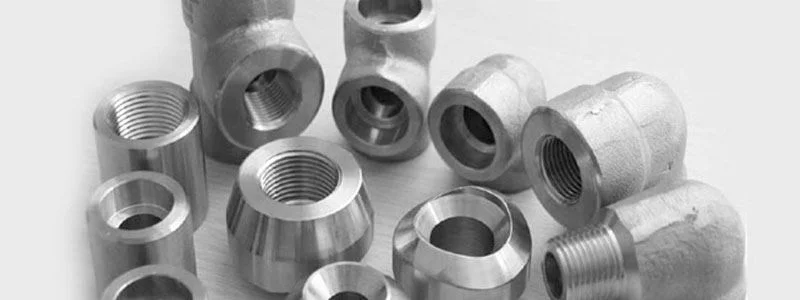
ASTM A182 F22 screwed and forged fittings are available in various sizes and types. Common products include elbows (90° and 45°), tees, reducers, caps, couplings, and bushings. They are manufactured in nominal pipe sizes from ½ inch to 24 inches. Both forged and screwed designs are available depending on application requirements. Screwed fittings are suitable for small-diameter pipelines where welding is impractical. Forged fittings are preferred for high-pressure and high-temperature applications. Custom fittings can be made to meet specific engineering needs. The versatility ensures compatibility with multiple piping systems. F22 fittings are widely recognized for their reliability and performance.
ASTM A182 F22 fittings exhibit excellent mechanical properties, ensuring strength, toughness, and durability. Typical tensile strength ranges from 485–620 MPa, and yield strength is around 250 MPa. Hardness is generally between 170–210 HB. The fittings maintain mechanical integrity at temperatures up to 550°C (1020°F). Elongation and reduction of area meet ASTM A182 standards, ensuring ductility. F22 fittings have good creep and fatigue resistance, suitable for long-term high-temperature service. Their high impact toughness reduces the risk of brittle fracture. Testing ensures all fittings meet strict mechanical and quality requirements. These properties make them ideal for critical industrial piping systems.
F22 fittings provide excellent resistance to oxidation, scaling, and high-temperature corrosion. Chromium and molybdenum enhance protection against sulfidation and carburization. The fittings perform well in steam, hot water, and chemical environments. Proper finishing further improves surface durability. Screwed fittings reduce leak paths, enhancing reliability. F22 fittings are suitable for acidic or alkaline conditions when combined with appropriate insulation. Their corrosion resistance ensures long service life and minimal maintenance costs. They are widely used in power generation and petrochemical industries. The material maintains structural integrity in demanding environments.
Forged F22 fittings offer superior strength, toughness, and uniform grain structure compared to cast or welded alternatives. Forging eliminates internal defects and improves high-temperature performance. These fittings are durable, reliable, and resistant to mechanical and thermal stress. They can be inspected easily using NDT techniques. Forged fittings ensure long-term safety and reduced maintenance costs. Their high creep and fatigue resistance make them suitable for critical industrial pipelines and high-temperature systems. ASTM A182 F22 forged fittings are widely preferred for demanding applications. Their robust construction provides dependable service in extreme conditions.
| Property | Requirement / Value |
|---|---|
| Standard | ASTM A182 |
| Grade | F22 |
| Material Type | Chromium-Molybdenum Alloy Steel (Low Carbon) |
| Form | Forged and Screwed Fittings |
| Dimensions | ASME B16.11 / ASME B16.9 standards |
| Pressure Rating | Up to 2500 psi (varies by size and type) |
| Temperature Range | -29°C to 550°C (-20°F to 1020°F) |
| Heat Treatment | Normalized and Tempered |
| Mechanical Testing | Tensile Test, Hardness Test, Impact Test as per ASTM A182 |
| Non-Destructive Testing (NDT) | Ultrasonic, Radiographic, Magnetic Particle, Dye Penetrant (as required) |
| Applications | High-pressure and high-temperature piping systems in power plants, petrochemical, and oil & gas industries |
ASTM A182 F22 fittings are widely used in fossil and thermal power plants. They are ideal for high-pressure steam lines, superheated and reheated steam pipelines, and boiler systems. The fittings withstand thermal stress, high pressure, and creep conditions. Screwed fittings simplify maintenance in smaller-diameter pipelines. F22’s durability ensures long-term performance with minimal downtime. They are essential for maintaining system safety and reliability. Fittings are commonly used in turbines, heat exchangers, and condensate lines. Their high-temperature performance makes them preferable over standard carbon steel.
In refineries, chemical, and gas processing plants, ASTM A182 F22 fittings handle high-pressure and high-temperature fluids. They are suitable for hydrocarbons, steam, and corrosive chemicals. The fittings resist thermal cycling, mechanical stress, and scaling. Screwed fittings allow easy installation in compact areas. F22’s corrosion resistance minimizes degradation and reduces maintenance frequency. The material ensures safe and reliable operation under continuous industrial processes. These fittings are used in critical pipelines where leakage or failure could be hazardous. F22 fittings meet international standards for chemical and petrochemical applications.
F22 forged fittings are used in upstream, midstream, and downstream oil and gas operations. They support high-pressure pipelines and equipment in refineries, gas processing units, and drilling operations. The material withstands extreme temperature and corrosive conditions, including sour gas applications. Forged fittings provide superior strength and durability compared to cast alternatives. Screwed fittings offer convenient assembly in remote or confined areas. F22’s creep and fatigue resistance reduce the risk of failure. These fittings are critical in ensuring operational safety. They are preferred in pipelines, manifolds, and high-temperature equipment connections.
Screwed F22 fittings provide ease of installation, time savings, and flexibility in small-diameter piping systems. Precision threading ensures leak-proof connections without welding. They are ideal for confined or remote locations. Screwed fittings are easy to disassemble and maintain, reducing downtime. They are suitable for moderate pressure and temperature applications. The combination of F22 material strength and threaded design ensures reliable performance. These fittings are widely used in industrial, chemical, and utility pipelines. They offer convenience without compromising durability.
| Element | Composition (%) |
|---|---|
| Carbon (C) | 0.05 – 0.15 |
| Manganese (Mn) | 0.30 – 0.60 |
| Phosphorus (P) | 0.025 max |
| Sulfur (S) | 0.015 max |
| Silicon (Si) | 0.10 – 0.35 |
| Chromium (Cr) | 1.90 – 2.60 |
| Molybdenum (Mo) | 0.85 – 1.05 |
| Vanadium (V) | 0.08 – 0.15 |
| Nickel (Ni) | 0.40 max |
| Copper (Cu) | 0.30 max |
| Property | Requirement / Value |
|---|---|
| Tensile Strength (UTS) | 485 – 620 MPa (70 – 90 ksi) |
| Yield Strength (0.2% offset) | 250 MPa min (36 ksi min) |
| Elongation (in 50 mm) | 22% min |
| Reduction of Area (RA) | 35% min |
| Hardness (Brinell) | 170 – 210 HB |
| Impact Toughness (Charpy V-notch) | 41 J min at room temperature |
| Service Temperature | -29°C to 550°C (-20°F to 1020°F) |
| Creep Rupture Strength | High-temperature service up to 550°C (1020°F) |
| Nominal Size (inches) | Outside Diameter (OD) (mm) | Wall Thickness (Schedule) | Center-to-End (C to E) (mm) | Weight (kg) |
|---|---|---|---|---|
| ½" | 21.3 | Sch 40 / Sch 80 | 35 / 38 | 0.2 / 0.25 |
| ¾" | 26.7 | Sch 40 / Sch 80 | 40 / 45 | 0.3 / 0.4 |
| 1" | 33.4 | Sch 40 / Sch 80 | 45 / 50 | 0.5 / 0.6 |
| 1½" | 48.3 | Sch 40 / Sch 80 | 60 / 65 | 1.0 / 1.2 |
| 2" | 60.3 | Sch 40 / Sch 80 | 70 / 75 | 1.5 / 1.8 |
| 3" | 88.9 | Sch 40 / Sch 80 | 90 / 100 | 3.0 / 3.5 |
| 4" | 114.3 | Sch 40 / Sch 80 | 110 / 120 | 5.0 / 5.8 |
| 6" | 168.3 | Sch 40 / Sch 80 | 140 / 150 | 9.0 / 10.5 |
| 8" | 219.1 | Sch 40 / Sch 80 | 180 / 190 | 15 / 17 |
| 10" | 273.0 | Sch 40 / Sch 80 | 220 / 230 | 22 / 25 |
| 12" | 323.9 | Sch 40 / Sch 80 | 260 / 280 | 30 / 35 |
| Standard / Specification | Equivalent Grade | Notes |
|---|---|---|
| ASME / ASTM | ASTM A182 F22 | Original ASTM specification |
| EN / European | 2.25Cr-1Mo / P22 | Chromium-molybdenum alloy steel for high-temperature service |
| DIN / German | 1.7380 | Equivalent high-temperature steel for pressure components |
| JIS / Japanese | S22C | Creep-resistant alloy steel comparable to F22 |
| GB / Chinese | 12Cr1MoV | High-temperature, pressure-resistant alloy steel |
| API / Oil & Gas | P22 / 12Cr1MoV | Widely used in refineries and petrochemical industries |
ASTM A182 F22 Screwed & Forged Fittings are high-strength chromium-molybdenum alloy steel fittings designed for high-pressure, high-temperature, and moderately corrosive service. They are widely used in power plants, chemical, petrochemical, and oil & gas industries due to their durability and heat resistance.
This standard covers forged fittings such as elbows, tees, reducers, caps, and couplings, as well as screwed fittings with threaded connections. Both types are designed to withstand high pressure and temperature in critical industrial piping systems.
ASTM A182 F22 fittings are made from chromium-molybdenum steel containing carbon, manganese, phosphorus, sulfur, silicon, chromium, and molybdenum. This ensures high strength, excellent heat resistance, and moderate corrosion resistance for demanding industrial applications.
These fittings offer high tensile strength, yield strength, hardness, and toughness. They can handle extreme pressure and temperature, making them suitable for critical applications in refineries, power plants, and chemical processing units.
Forged fittings can be welded following proper procedures, including preheating and post-weld heat treatment. Threaded fittings are typically used for screw connections and are not welded. Following recommended procedures prevents cracking and ensures long-term durability.
These fittings are available in pressure classes 150#, 300#, 600#, 900#, 1500#, and 2500#, according to ASME B16.11 and B16.5 standards. The selection of pressure class depends on the piping system’s operating conditions.
ASTM A182 F22 fittings are available in sizes ranging from ½ inch to 48 inches, suitable for both small-diameter process piping and large industrial pipelines in power plants, refineries, and chemical facilities.
The chromium-molybdenum composition provides moderate corrosion resistance. For highly corrosive environments, protective coatings or alternative alloy steels may be necessary to ensure long service life and prevent premature failure.
These fittings undergo hydrostatic testing, dimensional inspections, radiographic and ultrasonic testing, and hardness checks. This ensures compliance with ASTM and ASME standards, guaranteeing reliability and safety under high-pressure service conditions.
Industries such as power generation, petrochemical, oil & gas, chemical processing, and shipbuilding extensively use ASTM A182 F22 fittings for high-pressure, high-temperature, and moderately corrosive piping systems due to their durability, strength, and heat resistance.
We export steel pipes and tubes to over 60 countries worldwide, serving clients across Asia, Europe, the Middle East, Africa, Oceania, and the Americas. Our strong global logistics network ensures reliable delivery, quality assurance, and compliance with international standards.
Export Destinations Include:
Afghanistan, Albania, Andorra, Angola, Austria, Australia, Bahrain, Bangladesh,
Bhutan, Brazil, Brunei, Belarus, Belgium, Bulgaria, Cambodia, China, Cyprus,
Croatia, Czech Republic, Canada, Denmark, Estonia, Egypt, Finland, France,
Germany, Greece, Georgia, Hungary, Iceland, Ireland, Italy, Indonesia, Iran,
Iraq, Israel, Japan, Jordan, Kazakhstan, Kuwait, Kyrgyzstan, Lebanon, Latvia,
Latin America, Liechtenstein, Lithuania, Luxembourg, Malta, Madagascar, Mexico,
Moldova, Monaco, Malaysia, Maldives, Mongolia, Myanmar (Burma), Nepal,
New Zealand, North Korea, Netherlands, Norway, Nigeria, Oman, Poland, Portugal,
Pakistan, Palestine, Philippines, Qatar, Russia, Romania, San Marino,
Serbia and Montenegro, Slovakia, Slovenia, Spain, Sweden, Switzerland,
Saudi Arabia, Singapore, South Korea, South Africa, Sri Lanka, Sudan, Syria,
Taiwan, Tanzania, Tajikistan, Thailand, Turkey, Turkmenistan, Ukraine,
United Kingdom, United Arab Emirates (UAE), Uzbekistan, Venezuela, Vietnam,
Yemen, and more.

