
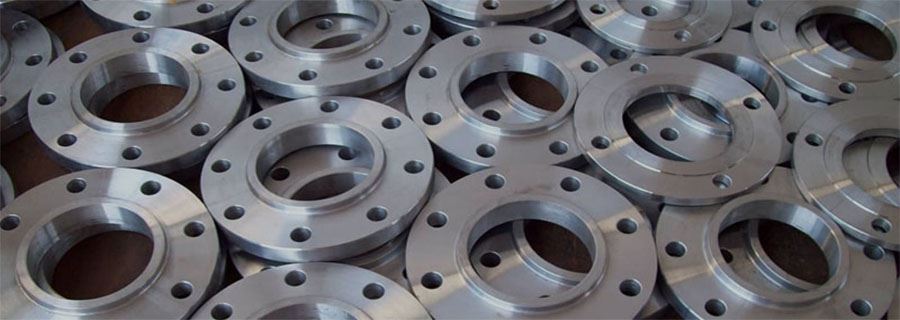
ASTM A182 F91 Steel Flanges are manufactured from advanced chromium-molybdenum alloy steel with controlled additions of vanadium and niobium. This material composition provides superior mechanical strength and excellent resistance to high-temperature creep. These flanges are forged to ensure uniform grain structure and enhanced durability. ASTM A182 F91 flanges are commonly used in severe service environments. They perform reliably under high pressure and elevated temperatures. Their metallurgical stability makes them suitable for long-term operation. Industries prefer F91 flanges for critical piping systems. They comply with strict international quality standards.
The chemical composition of ASTM A182 F91 includes approximately 9% chromium and 1% molybdenum. The addition of vanadium and niobium improves creep rupture strength and thermal stability. This alloy design minimizes oxidation and corrosion at elevated temperatures. F91 steel flanges maintain structural integrity during continuous thermal cycling. The controlled carbon content enhances weldability and toughness. These properties make F91 flanges ideal for high-energy piping systems. They are engineered for demanding industrial conditions. Consistent chemistry ensures predictable performance.
ASTM A182 F91 Steel Flanges are widely used in power generation industries, particularly in supercritical and ultra-supercritical boilers. They are suitable for steam lines, headers, and turbine piping systems. Their high creep resistance allows safe operation over extended service life. F91 flanges withstand thermal fatigue better than conventional low-alloy steels. They reduce maintenance frequency in high-temperature applications. Power plants rely on these flanges for safety and efficiency. Their performance supports continuous plant operation. Reliability is a key advantage.
In the oil and gas industry, ASTM A182 F91 flanges are used in high-pressure refining and processing units. They are suitable for hydrocrackers, catalytic reformers, and heat exchangers. These flanges resist oxidation in high-temperature hydrocarbon environments. Their strength allows thinner wall designs without compromising safety. This results in reduced system weight and improved efficiency. F91 flanges support aggressive operating conditions. They meet stringent refinery specifications. Their durability ensures long service life.
ASTM A182 F91 Steel Flanges are commonly supplied in heat-treated condition, typically normalized and tempered. Proper heat treatment enhances toughness and creep resistance. It also ensures uniform hardness across the flange body. This process improves resistance to cracking during service. Heat-treated F91 flanges offer consistent mechanical properties. Quality control during heat treatment is critical. Manufacturers follow strict procedures to meet standards. This ensures dependable field performance.
These flanges are available in various types including weld neck, slip-on, blind, socket weld, and threaded designs. Each flange type serves specific piping requirements. Weld neck flanges are preferred for high-stress applications. Blind flanges are used to isolate piping systems. Slip-on flanges offer ease of installation. ASTM A182 F91 material is suitable for all these forms. Design flexibility enhances system compatibility. Engineers select types based on operating needs.
| Specification – ASTM A182 F91 Steel Flanges | |
|---|---|
| Standard | ASTM A182 / ASME SA182 |
| Grade | F91 |
| Material Type | Chromium-Molybdenum-Vanadium Alloy Steel |
| Chromium Content | Approx. 9% |
| Molybdenum Content | Approx. 1% |
| Product Forms | Weld Neck, Slip-On, Blind, Socket Weld, Threaded |
| Pressure Rating | ASME Class 150, 300, 600, 900, 1500, 2500 |
| Dimensional Standards | ASME B16.5 / ASME B16.47 |
| Heat Treatment | Normalized and Tempered |
| Manufacturing Process | Forged |
| Testing | Chemical, Mechanical, NDT (if specified) |
| Application | Power Plants, Refineries, Petrochemical, Oil & Gas |
ASTM A182 F91 Steel Flanges conform dimensionally to ASME B16.5 and ASME B16.47 standards. They are available in multiple pressure classes such as 150, 300, 600, 900, 1500, and 2500. Accurate dimensions ensure proper sealing and alignment. Precision machining improves gasket seating surfaces. Dimensional accuracy is critical for leak-free joints. These flanges integrate easily into standard piping systems. Compliance with standards ensures global acceptance. Installation becomes efficient and safe.
Mechanical properties of ASTM A182 F91 flanges include high tensile strength and excellent yield strength. These properties are retained even at elevated temperatures. The alloy exhibits good impact resistance when properly heat treated. High hardness limits deformation under load. These characteristics improve overall system safety. F91 flanges handle cyclic stresses effectively. Their mechanical stability is well documented. Engineers trust them for critical services.
Weldability is an important feature of ASTM A182 F91 Steel Flanges. Preheating and post-weld heat treatment are generally required. These procedures help prevent cracking and ensure joint integrity. Controlled welding practices are essential for best results. Proper welding maintains mechanical and creep properties. Skilled fabrication improves service reliability. Welding standards must be strictly followed. This ensures long-term performance of the flange joints.
| Chemical Composition – ASTM A182 F91 Steel Flanges | |
|---|---|
| Element | Composition (%) |
| Carbon (C) | 0.08 – 0.12 |
| Manganese (Mn) | 0.30 – 0.60 |
| Phosphorus (P) | 0.020 max |
| Sulfur (S) | 0.010 max |
| Silicon (Si) | 0.20 – 0.50 |
| Chromium (Cr) | 8.00 – 9.50 |
| Molybdenum (Mo) | 0.85 – 1.05 |
| Vanadium (V) | 0.18 – 0.25 |
| Niobium (Nb) | 0.06 – 0.10 |
| Nitrogen (N) | 0.03 – 0.07 |
| Mechanical Properties – ASTM A182 F91 Steel Flanges | |
|---|---|
| Tensile Strength | 585 MPa min (85 ksi min) |
| Yield Strength (0.2% Offset) | 415 MPa min (60 ksi min) |
| Elongation | 20% min |
| Reduction of Area | 40% min |
| Hardness | 250 HB max |
| Impact Test | As per ASTM A182 (when specified) |
| Heat Treatment Condition | Normalized and Tempered |
| Testing Temperature | Room Temperature |
| Dimension Chart – ASTM A182 F91 Steel Flanges (ASME B16.5) | |||||||
|---|---|---|---|---|---|---|---|
| Nominal Pipe Size (NPS) | Outside Diameter (OD) | Bolt Circle Diameter (BCD) | Flange Thickness (T) | Raised Face Height (RF) | Number of Bolt Holes | Bolt Hole Diameter | Pressure Class |
| 1/2" | 89 mm | 60 mm | 11 mm | 1.6 mm | 4 | 15 mm | 150 |
| 1" | 108 mm | 79 mm | 13 mm | 1.6 mm | 4 | 16 mm | 150 |
| 2" | 152 mm | 121 mm | 16 mm | 1.6 mm | 4 | 19 mm | 150 |
| 3" | 191 mm | 152 mm | 19 mm | 1.6 mm | 4 | 19 mm | 150 |
| 4" | 229 mm | 190 mm | 24 mm | 1.6 mm | 8 | 19 mm | 150 |
| 6" | 279 mm | 241 mm | 25 mm | 1.6 mm | 8 | 22 mm | 150 |
| 8" | 343 mm | 298 mm | 28 mm | 1.6 mm | 8 | 22 mm | 150 |
| 10" | 406 mm | 362 mm | 30 mm | 1.6 mm | 12 | 25 mm | 150 |
| Equivalent Grades – ASTM A182 F91 Steel Flanges | |
|---|---|
| Standard | Equivalent Grade |
| ASTM / ASME | ASTM A182 F91 / ASME SA182 F91 |
| EN (European Standard) | EN 10222-2 X10CrMoVNb9-1 / EN 10028-2 X10CrMoVNb9-1 |
| DIN | DIN EN 10222-2 X10CrMoVNb9-1 |
| BS | BS EN 10222-2 X10CrMoVNb9-1 |
| JIS | JIS G3458 STPA28 (Closest Equivalent) |
| ISO | ISO 9329-2 X10CrMoVNb9-1 |
| AFNOR | NF A 32-531 X10CrMoVNb9-1 |
| GB (China) | GB/T 5310 10Cr9Mo1VNbN (Approximate Equivalent) |
ASTM A182 F91 Steel Flanges are high-strength chromium-molybdenum-vanadium alloy steel flanges designed for ultra-high-pressure and high-temperature service. They are widely used in power plants, petrochemical, oil & gas, and chemical industries due to their exceptional strength, heat resistance, and creep resistance.
This standard includes weld neck, slip-on, socket weld, threaded, lap joint, blind, and reducing flanges. Each type is manufactured to meet specific piping configurations and to handle extreme pressures and temperatures safely.
ASTM A182 F91 flanges are made from chromium-molybdenum-vanadium steel containing carbon, manganese, phosphorus, sulfur, silicon, chromium, molybdenum, and vanadium. This alloying provides high strength, excellent creep resistance, and good corrosion resistance in high-temperature service.
These flanges offer very high tensile and yield strength, hardness, and excellent toughness. They are capable of withstanding ultra-high pressures and temperatures, making them suitable for critical applications in power generation, petrochemical, and oil & gas industries.
Yes, these flanges are suitable for welding. Due to their alloy composition, proper preheating, controlled welding procedures, and post-weld heat treatment (PWHT) are essential to prevent cracking and maintain structural integrity under high-temperature service.
ASTM A182 F91 flanges are available in pressure classes 150#, 300#, 600#, 900#, 1500#, and 2500# in accordance with ASME B16.5 standards. The pressure class should be selected based on operating pressure, temperature, and piping system requirements.
These flanges are available in sizes ranging from ½ inch to 48 inches, covering both small and large industrial piping systems. This makes them suitable for high-pressure pipelines in power plants, refineries, and chemical processing units.
ASTM A182 F91 flanges provide good corrosion resistance due to their chromium-molybdenum-vanadium composition. For highly corrosive environments, additional protective coatings or alloy alternatives may be necessary to ensure long-term service life.
These flanges undergo hydrostatic testing, dimensional inspections, radiographic and ultrasonic testing, and hardness verification. These tests ensure compliance with ASTM and ASME standards and guarantee reliability in ultra-high-pressure and high-temperature applications.
Industries such as power generation, oil & gas, petrochemical, chemical processing, and shipbuilding commonly use ASTM A182 F91 flanges for ultra-high-pressure and high-temperature piping systems due to their exceptional strength, heat resistance, and reliability in critical applications.
We export steel pipes and tubes to over 60 countries worldwide, serving clients across Asia, Europe, the Middle East, Africa, Oceania, and the Americas. Our strong global logistics network ensures reliable delivery, quality assurance, and compliance with international standards.
Export Destinations Include:
Afghanistan, Albania, Andorra, Angola, Austria, Australia, Bahrain, Bangladesh,
Bhutan, Brazil, Brunei, Belarus, Belgium, Bulgaria, Cambodia, China, Cyprus,
Croatia, Czech Republic, Canada, Denmark, Estonia, Egypt, Finland, France,
Germany, Greece, Georgia, Hungary, Iceland, Ireland, Italy, Indonesia, Iran,
Iraq, Israel, Japan, Jordan, Kazakhstan, Kuwait, Kyrgyzstan, Lebanon, Latvia,
Latin America, Liechtenstein, Lithuania, Luxembourg, Malta, Madagascar, Mexico,
Moldova, Monaco, Malaysia, Maldives, Mongolia, Myanmar (Burma), Nepal,
New Zealand, North Korea, Netherlands, Norway, Nigeria, Oman, Poland, Portugal,
Pakistan, Palestine, Philippines, Qatar, Russia, Romania, San Marino,
Serbia and Montenegro, Slovakia, Slovenia, Spain, Sweden, Switzerland,
Saudi Arabia, Singapore, South Korea, South Africa, Sri Lanka, Sudan, Syria,
Taiwan, Tanzania, Tajikistan, Thailand, Turkey, Turkmenistan, Ukraine,
United Kingdom, United Arab Emirates (UAE), Uzbekistan, Venezuela, Vietnam,
Yemen, and more.

