
ASTM A234 WP5 Alloy Steel Butt Weld Pipe Fittings are high-quality low alloy steel fittings designed for moderate-temperature and moderate-pressure applications. Manufactured from chromium-molybdenum steel, these fittings offer excellent mechanical properties, durability, and reliable performance in industrial pipelines. They are widely used in power plants, petrochemical industries, refineries, and chemical plants. WP5 fittings comply with ASTM A234 standards, ensuring dimensional accuracy, material quality, and consistent performance. Both seamless and welded manufacturing processes are used to meet different project requirements. Butt weld connections provide leak-proof joints essential for pipeline integrity. Proper heat treatment enhances strength, toughness, and resistance to thermal stress. WP5 fittings are compatible with ASTM A106 Grade B pipes and equivalent carbon steels. These fittings are engineered to withstand thermal expansion, pressure surges, and operational stresses.
The chemical composition of WP5 fittings includes carbon, manganese, silicon, chromium, molybdenum, and trace amounts of phosphorus, sulfur, and nitrogen. Carbon content balances hardness and ductility, while manganese and silicon improve strength and toughness. Chromium enhances resistance to oxidation and scaling at elevated temperatures, while molybdenum improves creep strength and thermal stability. Low phosphorus and sulfur reduce brittleness and cracking risk. Nitrogen is added to refine the microstructure and improve impact toughness. This alloy composition makes WP5 fittings suitable for continuous service in high-temperature pipelines. Controlled heat treatment ensures uniform mechanical properties and dimensional stability. WP5 is ideal for steam lines, hot water pipelines, and process fluid systems. Proper handling during manufacturing preserves alloy properties.
Mechanical properties of ASTM A234 WP5 fittings include tensile strength, yield strength, elongation, impact toughness, and hardness. Typical tensile strength ranges from 485–620 MPa, with a minimum yield strength of 250 MPa. Elongation is generally ≥ 20%, providing sufficient ductility under operational stress. Impact toughness is maintained at ≥ 27 J (Charpy V-notch) at room temperature. Hardness ranges from 20–28 HRC, ensuring resistance to deformation. These properties allow WP5 fittings to withstand moderate pressure and temperature without failure. The combination of strength and toughness ensures reliable service in industrial pipelines. WP5 fittings are widely used in auxiliary and main steam lines. Their mechanical performance supports continuous and intermittent service. These properties make WP5 a versatile material for various industrial applications.
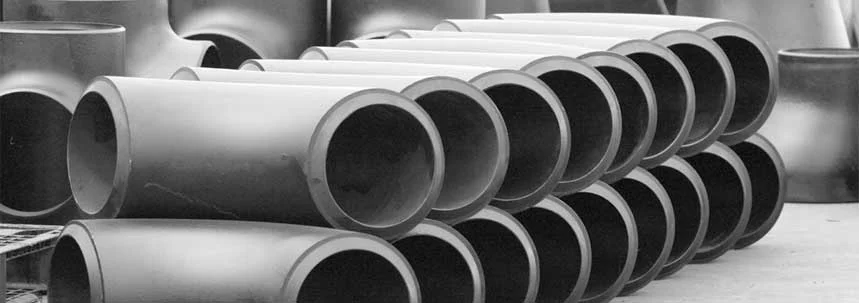
WP5 fittings are available in multiple configurations, including elbows, tees, reducers, caps, and stub ends. Elbows facilitate changes in pipeline direction while maintaining smooth flow. Tees allow branching of pipelines efficiently. Reducers connect pipes of different diameters seamlessly. Caps seal pipe ends securely, and stub ends are used with flanges for easy maintenance and disassembly. All fittings are designed for butt welding to provide leak-proof joints. Dimensional standards comply with ASME B16.9, B16.28, and MSS SP-43. Smooth internal surfaces reduce turbulence and pressure drop in pipelines. WP5 fittings support both horizontal and vertical pipeline installations. Proper design ensures long-term operational reliability.
WP5 fittings are widely used in industries requiring moderate-temperature and moderate-pressure service, including power generation, petrochemical plants, refineries, and chemical processing units. They are ideal for steam, hot water, and process fluid pipelines. WP5 provides moderate resistance to scaling, oxidation, and thermal fatigue. Auxiliary piping systems benefit from the alloy’s strength and toughness. These fittings are suitable for continuous or intermittent service. WP5 ensures safe, reliable, and efficient pipeline operation. Its versatility allows integration into both new construction and retrofit projects. WP5 remains a preferred choice for industrial engineers due to its balanced performance. Proper installation ensures long-term service life.
Heat treatment enhances the performance of ASTM A234 WP5 fittings. Normalizing followed by tempering refines the microstructure, improving toughness, creep resistance, and dimensional stability. Heat treatment relieves residual stresses caused by forming and welding. Fittings resist cracking under thermal and mechanical loads. Post-weld heat treatment is recommended for critical applications to restore toughness. Controlled cooling ensures uniform mechanical properties. Heat-treated WP5 fittings maintain integrity in high-temperature pipelines. This process ensures compliance with ASTM and ASME standards. Heat treatment extends service life and reduces maintenance frequency. It also supports consistent quality across production batches.
| Parameter | Specification |
|---|---|
| Standard | ASTM A234 / ASME SA234 |
| Grade | WP5 |
| Material Type | Chromium-Molybdenum Alloy Steel |
| Product Type | Butt Weld Pipe Fittings |
| Manufacturing Process | Seamless / Welded / Fabricated |
| Fitting Types | Elbows, Tees, Reducers, Caps, Stub Ends |
| Size Range | 1/2” NB to 48” NB |
| Wall Thickness | SCH 10 to SCH XXS (As per ASME B36.10) |
| Dimensional Standards | ASME B16.9, ASME B16.28, MSS SP-43 |
| Heat Treatment | Normalized and Tempered |
| End Connection | Butt Weld |
| Surface Finish | Black, Shot Blasted, Pickled |
| Testing | Chemical Analysis, Mechanical Tests, Non-Destructive Testing (NDT) |
| Certification | EN 10204 3.1 / 3.2 Mill Test Certificate (MTC) |
| Application | Power Plants, Refineries, Petrochemical Industries, Moderate-Temperature and Moderate-Pressure Piping Systems |
Welding of WP5 fittings requires preheating, controlled interpass temperatures, and low-hydrogen electrodes to avoid thermal cracking. Post-weld heat treatment ensures restored toughness and stress relief. Skilled welding ensures strong, leak-proof connections. Non-destructive testing, such as radiography or ultrasonic inspection, is recommended to verify weld quality. Adhering to ASTM and ASME welding guidelines is crucial for safe operation. Proper welding practices maintain mechanical properties of the alloy. WP5 fittings retain strength and ductility after welding. Suitable welding supports moderate-pressure and temperature applications. Correct procedures extend pipeline life and reduce maintenance costs.
Dimensional standards for WP5 fittings comply with ASME B16.9, B16.28, and MSS SP-43. Fittings are manufactured with precise outside diameters, wall thicknesses, and end bevels suitable for butt welding. Wall schedules range from SCH 10 to SCH XXS as per ASME B36.10. Accurate dimensions ensure proper fit-up, reducing leakage risk. Smooth internal surfaces minimize turbulence and erosion. Standardized dimensions ensure compatibility with global piping components. Proper tolerances simplify installation and reduce field modifications. WP5 fittings provide consistent quality and reliable service in pipelines. Dimensional precision ensures efficiency and safety in operations.
WP5 fittings undergo stringent quality control to ensure compliance with ASTM standards. Chemical analysis, mechanical testing, and non-destructive inspection are performed on every batch. Tensile, impact, and hardness tests verify performance. Radiography and ultrasonic testing detect internal defects. Mill test certificates (MTC) are provided to certify material compliance and traceability. Dimensional inspections confirm adherence to ASME specifications. Quality assurance ensures safe operation in critical pipelines. WP5 fittings are suitable for high-reliability industrial systems. Proper QC maintains uniformity and performance across production batches.
| Element | Weight % |
|---|---|
| Carbon (C) | 0.05 – 0.15% |
| Manganese (Mn) | 0.30 – 0.60% |
| Silicon (Si) | 0.20 – 0.35% |
| Chromium (Cr) | 0.50 – 1.00% |
| Molybdenum (Mo) | 0.45 – 0.65% |
| Phosphorus (P) | ≤ 0.035% |
| Sulfur (S) | ≤ 0.035% |
| Nitrogen (N) | ≤ 0.012% |
| Property | Value |
|---|---|
| Tensile Strength (Ultimate) | 485 – 620 MPa (70 – 90 ksi) |
| Yield Strength (0.2% Offset) | ≥ 250 MPa (36 ksi) |
| Elongation in 50 mm | ≥ 20% |
| Impact Toughness (Charpy V-notch, 25°C) | ≥ 27 J (20 ft-lb) |
| Hardness (HRC) | 20 – 28 HRC |
| Maximum Operating Temperature | Up to 540°C (1004°F) |
| Operating Pressure | As per ASME B31.1 / B31.3 |
| Creep Rupture Strength at 550°C | ≥ 55 MPa |
| Nominal Pipe Size (NPS) | Outside Diameter (OD) | Wall Thickness (Schedule) | Radius / Length | Weight (kg) |
|---|---|---|---|---|
| 1/2" | 21.3 mm | SCH 10, 40, 80 | Short / Long | 0.2 – 0.5 |
| 3/4" | 26.7 mm | SCH 10, 40, 80 | Short / Long | 0.3 – 0.7 |
| 1" | 33.4 mm | SCH 10, 40, 80 | Short / Long | 0.4 – 1.0 |
| 2" | 60.3 mm | SCH 10, 40, 80 | Short / Long | 1.5 – 3.0 |
| 4" | 114.3 mm | SCH 10, 40, 80 | Short / Long | 5 – 10 |
| 6" | 168.3 mm | SCH 10, 40, 80 | Short / Long | 10 – 20 |
| 8" | 219.1 mm | SCH 10, 40, 80 | Short / Long | 20 – 35 |
| 10" | 273.0 mm | SCH 10, 40, 80 | Short / Long | 35 – 55 |
| 12" | 323.9 mm | SCH 10, 40, 80 | Short / Long | 55 – 80 |
| 16" | 406.4 mm | SCH 10, 40, 80 | Short / Long | 90 – 130 |
| Standard | Equivalent Grade |
|---|---|
| ASTM A234 / ASME SA234 | WP5 |
| ASTM A335 / ASME SA335 | P5 |
| DIN | 1.7355 / X12CrMo5-1 |
| EN | 12CrMo5 |
| JIS | SCM435 / Equivalent |
| BS / British Standard | BS 1503-5 / P5 Equivalent |
ASTM A234 WP5 Butt-Weld Pipe Fittings are low-alloy steel fittings designed for welded connections in high-pressure and high-temperature piping systems. They are commonly used in chemical, petrochemical, power generation, and oil & gas industries where moderate corrosion resistance and excellent mechanical properties are required.
This specification includes elbows, tees, reducers, caps, and stub ends. All fittings are designed for butt-weld connections, ensuring smooth transitions and maintaining the integrity and pressure rating of piping systems under severe service conditions.
ASTM A234 WP5 fittings are made from low-alloy steel containing carbon, manganese, phosphorus, sulfur, silicon, chromium, and molybdenum. This composition provides good mechanical strength, heat resistance, and moderate corrosion resistance for industrial service.
These fittings provide high tensile and yield strength, toughness, and ductility. They are capable of withstanding elevated pressures and temperatures, making them suitable for demanding applications in power plants, refineries, and chemical processing units.
Yes, ASTM A234 WP5 fittings are designed for butt-weld connections. They exhibit excellent weldability, and post-weld heat treatment (PWHT) is often recommended for high-temperature service to prevent cracking and ensure structural integrity.
ASTM A234 WP5 fittings are available in nominal pipe sizes ranging from ½ inch to 48 inches, covering both small and large industrial piping systems. This makes them suitable for pipelines in power plants, petrochemical units, and oil & gas installations.
These low-alloy steel fittings provide moderate corrosion resistance due to their chromium and molybdenum content. For highly corrosive or chemical environments, additional protective coatings or alloyed alternatives may be required to ensure longevity.
ASTM A234 WP5 fittings undergo hydrostatic testing, dimensional inspections, radiographic or ultrasonic examination, and hardness testing. These tests ensure compliance with ASTM and ASME standards and guarantee safe operation under high-pressure and high-temperature service.
Industries such as power generation, petrochemical, chemical processing, and oil & gas extensively use ASTM A234 WP5 fittings due to their ability to handle high pressure, elevated temperature, and moderate corrosive conditions in welded piping systems.
ASTM A234 WP5 fittings comply with ASTM A234/A234M standards for carbon and alloy steel butt-weld fittings, and conform to ASME B16.9 dimensional standards. This ensures compatibility, safety, and reliability in welded piping systems.
We export steel pipes and tubes to over 60 countries worldwide, serving clients across Asia, Europe, the Middle East, Africa, Oceania, and the Americas. Our strong global logistics network ensures reliable delivery, quality assurance, and compliance with international standards.
Export Destinations Include:
Afghanistan, Albania, Andorra, Angola, Austria, Australia, Bahrain, Bangladesh,
Bhutan, Brazil, Brunei, Belarus, Belgium, Bulgaria, Cambodia, China, Cyprus,
Croatia, Czech Republic, Canada, Denmark, Estonia, Egypt, Finland, France,
Germany, Greece, Georgia, Hungary, Iceland, Ireland, Italy, Indonesia, Iran,
Iraq, Israel, Japan, Jordan, Kazakhstan, Kuwait, Kyrgyzstan, Lebanon, Latvia,
Latin America, Liechtenstein, Lithuania, Luxembourg, Malta, Madagascar, Mexico,
Moldova, Monaco, Malaysia, Maldives, Mongolia, Myanmar (Burma), Nepal,
New Zealand, North Korea, Netherlands, Norway, Nigeria, Oman, Poland, Portugal,
Pakistan, Palestine, Philippines, Qatar, Russia, Romania, San Marino,
Serbia and Montenegro, Slovakia, Slovenia, Spain, Sweden, Switzerland,
Saudi Arabia, Singapore, South Korea, South Africa, Sri Lanka, Sudan, Syria,
Taiwan, Tanzania, Tajikistan, Thailand, Turkey, Turkmenistan, Ukraine,
United Kingdom, United Arab Emirates (UAE), Uzbekistan, Venezuela, Vietnam,
Yemen, and more.

