
ASTM A234 WP91 Alloy Steel Butt Weld Pipe Fittings are manufactured for high-temperature and high-pressure piping systems used in critical industrial applications. These fittings are produced from chromium-molybdenum alloy steel, which provides excellent mechanical strength and thermal stability. WP91 is specifically designed to withstand extreme operating conditions, including elevated temperatures and cyclic stresses. The fittings are commonly supplied in normalized and tempered condition to enhance toughness and creep resistance. They comply with stringent quality requirements defined under ASTM A234 standards. Butt weld fittings ensure smooth flow characteristics and minimal pressure loss in piping systems. WP91 fittings are widely accepted in power generation and petrochemical industries. Their superior metallurgical structure ensures long service life. These fittings are engineered for reliability and safety.Corrosion resistance is a significant advantage of ASTM A234 WP91 alloy steel fittings. Chromium content provides protection against oxidation at elevated temperatures. The alloy resists scaling and metal loss during prolonged service. WP91 performs well in both oxidizing and mildly reducing environments. It is suitable for steam, gas, and high-temperature fluid applications. Proper insulation and coating further enhance corrosion resistance. These fittings are not typically used for highly corrosive acids. However, they excel in high-temperature service conditions. Their corrosion resistance contributes to extended service life.
The chemical composition of ASTM A234 WP91 includes controlled amounts of chromium, molybdenum, vanadium, niobium, and nitrogen. Chromium enhances oxidation and corrosion resistance at high temperatures. Molybdenum improves creep strength and resistance to softening during prolonged service. Vanadium and niobium contribute to grain refinement and precipitation strengthening. The balanced alloy content ensures excellent weldability when proper procedures are followed. Low impurity levels help maintain structural integrity under stress. Strict heat treatment processes optimize the microstructure of the material. These chemical characteristics make WP91 ideal for demanding environments. The composition complies fully with ASTM and ASME requirements.ASTM A234 WP91 butt weld fittings offer excellent cost efficiency over their lifecycle. Although initial material cost may be higher, long-term benefits outweigh expenses. Reduced maintenance and downtime lead to operational savings. High strength allows thinner wall designs in some applications. Longer service intervals minimize replacement frequency. Improved reliability reduces the risk of system failures. These fittings support continuous plant operation. Their durability makes them a preferred choice for critical systems. Lifecycle performance justifies their selection.
ASTM A234 WP91 butt weld fittings exhibit outstanding mechanical properties such as high tensile strength and yield strength. These properties are maintained even under prolonged exposure to elevated temperatures. The material demonstrates excellent resistance to thermal fatigue and pressure fluctuations. High creep rupture strength makes WP91 suitable for long-term service in power plants. Impact toughness is ensured through proper heat treatment and controlled manufacturing. The fittings maintain dimensional stability under severe operating conditions. Their hardness levels are carefully controlled to avoid brittleness. Mechanical consistency ensures dependable performance in critical pipelines. These attributes reduce maintenance and replacement costs.These fittings are widely used in combined cycle power plants and ultra-supercritical boilers. WP91 material supports higher operating temperatures compared to conventional alloys. This allows improved thermal efficiency in power generation. Higher efficiency results in reduced fuel consumption. WP91 fittings help meet modern energy efficiency standards. They are suitable for advanced steam cycle technologies. Their performance supports environmentally friendly operations. Reduced emissions are an added benefit. These fittings align with modern engineering requirements.
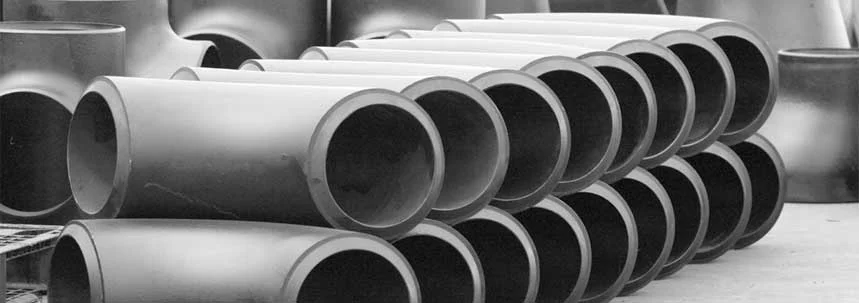
Butt weld fittings manufactured under ASTM A234 WP91 include elbows, tees, reducers, caps, and stub ends. These fittings are designed to provide strong, leak-proof joints when welded to pipes. Butt welding allows uniform stress distribution across the joint. This welding method also eliminates the need for threaded or flanged connections. WP91 fittings are compatible with pipes conforming to ASTM A335 P91 grades. Precision machining ensures accurate angles and dimensions. Smooth internal surfaces minimize turbulence and erosion. These fittings are suitable for both seamless and welded pipe systems. Their design supports high system efficiency.Handling and storage of ASTM A234 WP91 fittings require proper care. Fittings should be stored in dry, covered areas to prevent surface contamination. Mechanical damage must be avoided during transportation. Protective end caps are often used to prevent bevel damage. Identification markings should remain intact for traceability. Improper handling may affect weld preparation. Clean surfaces ensure high-quality welding. Proper storage preserves material properties. These practices maintain product integrity.
ASTM A234 WP91 fittings are extensively used in thermal and nuclear power plants. They are ideal for boiler systems, superheaters, reheaters, and main steam lines. The material performs exceptionally well in high-pressure steam applications. WP91 is also used in petrochemical and refinery units handling high-temperature fluids. These fittings support safe operation in hydrogen and hydrocarbon processing systems. Their resistance to oxidation makes them reliable in long-term service. WP91 fittings are often selected for critical piping circuits. They help meet strict safety and performance regulations. Their use enhances overall plant reliability.ASTM A234 WP91 fittings are available in a wide range of sizes and schedules. They can be supplied in standard or customized dimensions. Manufacturers can produce fittings as per project-specific drawings. Both seamless and welded constructions are available. Custom radii and thicknesses can be provided on request. Special inspection requirements can also be accommodated. Packaging is designed to prevent damage during transit. Timely delivery supports project schedules. Availability makes WP91 fittings versatile.
Heat treatment plays a crucial role in achieving the desired properties of ASTM A234 WP91 fittings. Normalizing followed by tempering refines the grain structure. This process improves toughness while maintaining high strength levels. Proper heat treatment reduces residual stresses from forming and welding. It also ensures uniform mechanical properties throughout the fitting. Incorrect heat treatment can negatively affect creep resistance. Therefore, manufacturers strictly control temperature and cooling rates. Post-weld heat treatment is often recommended after installation. This ensures long-term stability in service.In conclusion, ASTM A234 WP91 Alloy Steel Butt Weld Pipe Fittings are engineered for extreme service conditions. Their superior strength, creep resistance, and thermal stability make them indispensable in high-temperature piping systems. They comply with international standards and quality requirements. Proper manufacturing and heat treatment ensure consistent performance. These fittings enhance safety and efficiency in critical applications. Their long service life reduces operational risks. WP91 fittings are trusted by industries worldwide. They represent advanced alloy steel technology. Choosing WP91 ensures reliable and durable piping solutions.
| Parameter | Specification |
|---|---|
| Standard | ASTM A234 / ASME SA234 |
| Grade | WP91 |
| Material Type | Chromium-Molybdenum Alloy Steel |
| Product Type | Butt Weld Pipe Fittings |
| Manufacturing Process | Seamless / Welded / Fabricated |
| Fitting Types | Elbows, Tees, Reducers, Caps, Stub Ends |
| Size Range | 1/2” NB to 48” NB |
| Wall Thickness | SCH 10 to SCH XXS (As per ASME B36.10) |
| Dimensional Standards | ASME B16.9, ASME B16.28, MSS SP-43 |
| Heat Treatment | Normalized and Tempered |
| End Connection | Butt Weld |
| Surface Finish | Black, Shot Blasted, Pickled |
| Testing | Chemical Analysis, Mechanical Tests, NDT |
| Certification | EN 10204 3.1 / 3.2 |
| Application | Power Plants, Boilers, Refineries, Petrochemical Industries |
Welding ASTM A234 WP91 butt weld fittings requires special procedures and skilled workmanship. Preheating is necessary to prevent hydrogen-induced cracking. Low-hydrogen welding consumables are recommended for joining WP91 material. Controlled interpass temperatures help maintain metallurgical integrity. Post-weld heat treatment is mandatory to restore mechanical properties. Proper welding practices ensure strong and defect-free joints. Non-destructive testing is often performed after welding. Radiography and ultrasonic testing verify weld quality. These steps ensure safe pipeline operation.
ASTM A234 WP91 fittings are manufactured in compliance with dimensional standards such as ASME B16.9 and ASME B16.28. These standards ensure interchangeability and accurate fit-up during installation. Dimensional tolerances are tightly controlled to avoid misalignment. Proper wall thickness ensures pressure containment capability. End bevels are prepared to facilitate high-quality welding. Surface finish is maintained to prevent stress concentrations. Each fitting undergoes rigorous inspection before dispatch. Dimensional accuracy enhances field installation efficiency. Compliance with standards ensures global acceptance.
Quality control for ASTM A234 WP91 butt weld fittings includes chemical analysis, mechanical testing, and heat treatment verification. Manufacturers conduct tensile, impact, and hardness tests to ensure compliance. Microstructural examination confirms proper grain refinement. Non-destructive testing checks for surface and internal defects. Hydrostatic testing may be performed where required. Traceability is maintained through heat numbers and documentation. Mill test certificates accompany each batch of fittings. These certificates confirm conformity to ASTM standards. Strict quality checks ensure consistent product performance.
| Element | Composition (%) |
|---|---|
| Carbon (C) | 0.08 – 0.12 |
| Manganese (Mn) | 0.30 – 0.60 |
| Phosphorus (P) | ≤ 0.025 |
| Sulfur (S) | ≤ 0.015 |
| Silicon (Si) | 0.20 – 0.50 |
| Chromium (Cr) | 8.0 – 9.5 |
| Molybdenum (Mo) | 0.85 – 1.05 |
| Vanadium (V) | 0.05 – 0.12 |
| Niobium (Nb) | 0.03 – 0.06 |
| Nitrogen (N) | 0.03 – 0.06 |
| Property | Value |
|---|---|
| Tensile Strength (Ultimate) | 585 – 740 MPa (85 – 107 ksi) |
| Yield Strength (0.2% Offset) | 415 MPa (60 ksi) min |
| Elongation in 50 mm | ≥ 20% |
| Impact Toughness (Charpy V-notch, 25°C) | ≥ 27 J (20 ft-lb) |
| Hardness (HRC) | 20 – 28 HRC |
| Creep Rupture Strength at 600°C | ≥ 70 MPa |
| Operating Temperature Range | Up to 600°C (1112°F) |
| Operating Pressure | As per ASME B31.1 / B31.3 |
| Nominal Pipe Size (NPS) | Outside Diameter (OD) | Wall Thickness (Schedule) | Radius / Length | Weight (kg) |
|---|---|---|---|---|
| 1/2" | 21.3 mm | SCH 10, 40, 80 | Short / Long | 0.2 – 0.5 |
| 3/4" | 26.7 mm | SCH 10, 40, 80 | Short / Long | 0.3 – 0.7 |
| 1" | 33.4 mm | SCH 10, 40, 80 | Short / Long | 0.4 – 1.0 |
| 2" | 60.3 mm | SCH 10, 40, 80 | Short / Long | 1.5 – 3.0 |
| 4" | 114.3 mm | SCH 10, 40, 80 | Short / Long | 5 – 10 |
| 6" | 168.3 mm | SCH 10, 40, 80 | Short / Long | 10 – 20 |
| 8" | 219.1 mm | SCH 10, 40, 80 | Short / Long | 20 – 35 |
| 10" | 273.0 mm | SCH 10, 40, 80 | Short / Long | 35 – 55 |
| 12" | 323.9 mm | SCH 10, 40, 80 | Short / Long | 55 – 80 |
| 16" | 406.4 mm | SCH 10, 40, 80 | Short / Long | 90 – 130 |
| Standard | Equivalent Grade |
|---|---|
| ASTM A234 / ASME SA234 | WP91 |
| ASTM A335 / ASME SA335 | P91 |
| DIN | 1.4903 / X10CrMoVNb9-1 |
| EN | 10CrMo9-10 |
| JIS | SCM435 / SCM445 Equivalent |
| BS / British Standard | BS 1503-91 / P91 Equivalent |
ASTM A234 WP91 Butt-Weld Pipe Fittings are high-strength chromium-molybdenum-vanadium alloy steel fittings designed for ultra-high-pressure and high-temperature welded piping systems. They are commonly used in power plants, petrochemical, chemical, and oil & gas industries due to their exceptional strength, heat resistance, and creep resistance.
This specification includes elbows, tees, reducers, caps, and stub ends, all designed for butt-weld connections. These fittings ensure smooth transitions, reliable joints, and maintain the integrity and pressure rating of piping systems under extreme service conditions.
ASTM A234 WP91 fittings are made from chromium-molybdenum-vanadium alloy steel containing carbon, manganese, phosphorus, sulfur, silicon, chromium, molybdenum, and vanadium. This alloying provides high strength, excellent creep resistance, and good corrosion resistance in high-temperature applications.
These fittings offer very high tensile and yield strength, hardness, and excellent toughness. They can withstand ultra-high pressures and temperatures, making them suitable for critical piping applications in power plants, petrochemical, and oil & gas industries.
Yes, forged fittings are designed for butt-weld connections and can be welded using proper procedures, including preheating, controlled welding, and post-weld heat treatment (PWHT). Following these procedures prevents cracking and ensures long-term durability.
These fittings are available in nominal pipe sizes ranging from ½ inch to 48 inches, suitable for small to large industrial pipelines, including high-pressure systems in power plants, petrochemical, and oil & gas installations.
ASTM A234 WP91 fittings provide good corrosion resistance due to their chromium-molybdenum-vanadium composition. For highly corrosive environments, additional protective coatings or alternative alloy steels may be necessary to ensure long service life.
These fittings undergo hydrostatic testing, dimensional inspections, radiographic or ultrasonic examination, and hardness verification. This ensures compliance with ASTM and ASME standards and guarantees safety and reliability under ultra-high-pressure and high-temperature conditions.
Industries such as power generation, petrochemical, chemical processing, and oil & gas extensively use ASTM A234 WP91 fittings for welded piping systems requiring high strength, creep resistance, and durability under extreme service conditions.
ASTM A234 WP91 fittings comply with ASTM A234/A234M standards for chromium-molybdenum-vanadium alloy steel butt-weld fittings and conform to ASME B16.9 dimensional standards. This ensures compatibility, safety, and reliability in high-pressure and high-temperature piping systems.
We export steel pipes and tubes to over 60 countries worldwide, serving clients across Asia, Europe, the Middle East, Africa, Oceania, and the Americas. Our strong global logistics network ensures reliable delivery, quality assurance, and compliance with international standards.
Export Destinations Include:
Afghanistan, Albania, Andorra, Angola, Austria, Australia, Bahrain, Bangladesh,
Bhutan, Brazil, Brunei, Belarus, Belgium, Bulgaria, Cambodia, China, Cyprus,
Croatia, Czech Republic, Canada, Denmark, Estonia, Egypt, Finland, France,
Germany, Greece, Georgia, Hungary, Iceland, Ireland, Italy, Indonesia, Iran,
Iraq, Israel, Japan, Jordan, Kazakhstan, Kuwait, Kyrgyzstan, Lebanon, Latvia,
Latin America, Liechtenstein, Lithuania, Luxembourg, Malta, Madagascar, Mexico,
Moldova, Monaco, Malaysia, Maldives, Mongolia, Myanmar (Burma), Nepal,
New Zealand, North Korea, Netherlands, Norway, Nigeria, Oman, Poland, Portugal,
Pakistan, Palestine, Philippines, Qatar, Russia, Romania, San Marino,
Serbia and Montenegro, Slovakia, Slovenia, Spain, Sweden, Switzerland,
Saudi Arabia, Singapore, South Korea, South Africa, Sri Lanka, Sudan, Syria,
Taiwan, Tanzania, Tajikistan, Thailand, Turkey, Turkmenistan, Ukraine,
United Kingdom, United Arab Emirates (UAE), Uzbekistan, Venezuela, Vietnam,
Yemen, and more.

