
ASTM A350 LF3 Carbon Steel Flanges are forged flanges specifically developed for low-temperature pressure applications. This grade is designed to deliver excellent impact toughness at sub-zero temperatures. LF3 flanges are commonly used in piping systems where brittle fracture resistance is critical. The forging process enhances grain structure and mechanical strength. These flanges comply with strict ASTM and ASME requirements. They are suitable for both pressure vessels and pipeline systems. LF3 material ensures reliability in extreme service conditions. This makes them ideal for critical industrial installations.
LF3 carbon steel flanges are widely used in industries operating under low and cryogenic temperatures. They provide consistent performance even when exposed to sudden temperature drops. ASTM A350 LF3 offers higher toughness compared to standard carbon steel grades. The material composition is carefully controlled to achieve low-temperature ductility. These flanges maintain pressure integrity under demanding conditions. Their forged construction minimizes internal defects. This results in superior durability and service life. Engineers often select LF3 flanges for safety-critical applications.
ASTM A350 LF3 flanges are manufactured in accordance with ASME B16.5 and ASME B16.47 standards. They are available in various pressure classes and size ranges. Common flange types include weld neck, slip-on, socket weld, blind, and lap joint flanges. Each type serves specific piping requirements. LF3 flanges ensure secure and leak-proof connections. The forging process improves resistance to fatigue and stress. These flanges are suitable for both onshore and offshore installations. Their versatility makes them widely accepted across industries.
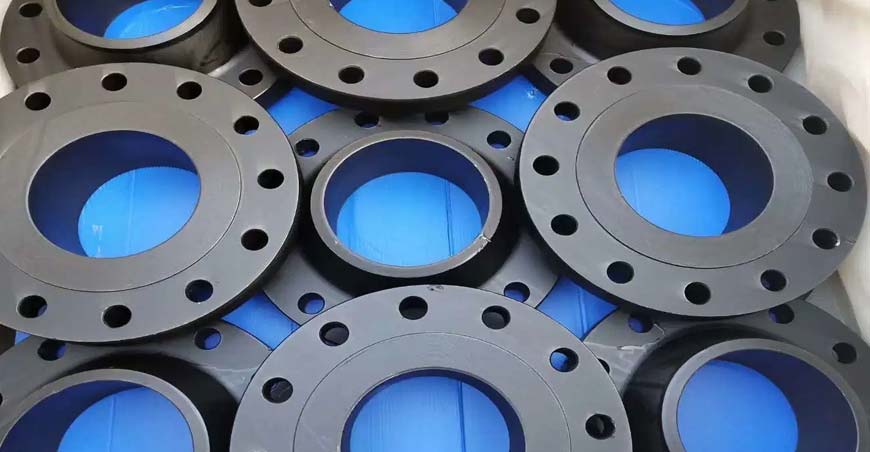
The low-temperature properties of ASTM A350 LF3 flanges make them suitable for LNG and cryogenic systems. They are designed to withstand impact loads at extremely low temperatures. Impact testing is a mandatory requirement for LF3 material. This ensures resistance to brittle failure. LF3 flanges maintain mechanical stability under cyclic loading. They perform reliably under high pressure and thermal stress. The material’s toughness enhances operational safety. This is critical for hazardous fluid handling systems.
ASTM A350 LF3 carbon steel flanges are commonly used in oil and gas pipelines. They are also utilized in petrochemical and refinery applications. These flanges handle hydrocarbons, gas, steam, and chemical fluids efficiently. LF3 material offers good weldability and machinability. Proper heat treatment further improves mechanical properties. The flanges can be supplied in normalized or normalized and tempered conditions. Surface finishes can be customized as per project requirements. This ensures compatibility with different operating environments.
Forged LF3 flanges provide superior strength compared to cast flanges. The forging process aligns the grain flow along the flange geometry. This enhances load-bearing capacity and pressure resistance. ASTM A350 LF3 flanges exhibit uniform mechanical behavior. They are less prone to cracking under stress. Their robust design ensures long-term performance. These flanges reduce maintenance and replacement costs. This makes them a cost-effective solution for critical piping systems.
| Specification – ASTM A350 LF3 Carbon Steel Flanges | |
|---|---|
| Standard | ASTM A350 / ASME SA350 |
| Grade | LF3 (Low Temperature Carbon Steel) |
| Product Type | Forged Steel Flanges |
| Manufacturing Process | Hot Forged |
| Flange Types | Weld Neck, Slip On, Socket Weld, Blind, Lap Joint |
| Size Range | 1/2" NB to 48" NB |
| Pressure Class | 150, 300, 600, 900, 1500, 2500 |
| Design Standard | ASME B16.5, ASME B16.47 Series A & B |
| Facing Types | RF, RTJ, FF |
| Heat Treatment | Normalized / Normalized & Tempered |
| Operating Temperature | Suitable for Low Temperature & Cryogenic Service |
| Testing Requirements | Chemical Analysis, Mechanical Test, Impact Test, NDT (if required) |
| Surface Finish | Black, Painted, Anti-corrosion Coated |
| Applications | LNG, Oil & Gas, Petrochemical, Cryogenic Systems, Refineries |
ASTM A350 LF3 flanges are suitable for applications involving fluctuating temperatures. They maintain toughness even at extremely low operating conditions. This property is essential in cryogenic and LNG facilities. LF3 flanges ensure consistent sealing performance. They are compatible with various gasket materials. Proper installation ensures leak-free joints. These flanges support high safety margins in piping systems. Their reliability contributes to uninterrupted plant operations.
Quality control plays a vital role in the production of ASTM A350 LF3 flanges. Each flange undergoes chemical analysis and mechanical testing. Impact tests are conducted at specified low temperatures. Dimensional inspection ensures compliance with ASME standards. Non-destructive testing may be performed as required. Heat treatment records are maintained for traceability. Mill test certificates are supplied with every batch. This ensures full compliance with international quality norms.
ASTM A350 LF3 flanges are available in a wide range of sizes. They can be manufactured to meet custom project specifications. Different pressure ratings allow flexibility in design. These flanges are compatible with low-temperature carbon steel pipes. Proper material selection ensures system integrity. LF3 flanges are often used in export-oriented projects. They meet international standards and acceptance criteria. This makes them suitable for global supply chains.
| Chemical Composition – ASTM A350 LF3 Carbon Steel Flanges | |
|---|---|
| Element | Composition (%) |
| Carbon (C) | 0.30 max |
| Manganese (Mn) | 0.60 – 1.35 |
| Silicon (Si) | 0.15 – 0.30 |
| Phosphorus (P) | 0.035 max |
| Sulfur (S) | 0.040 max |
| Nickel (Ni) | 3.50 – 3.75 |
| Chromium (Cr) | 0.30 max |
| Molybdenum (Mo) | 0.12 max |
| Copper (Cu) | 0.40 max |
| Mechanical Properties – ASTM A350 LF3 Carbon Steel Flanges | |
|---|---|
| Tensile Strength | 485 – 620 MPa |
| Yield Strength | 250 MPa min |
| Elongation | 20% min |
| Reduction of Area | 30% min |
| Impact Test (Charpy V-Notch) | 27 Joules min at −101°C |
| Hardness | 187 HB max |
| Heat Treatment Condition | Normalized / Normalized & Tempered |
| Testing Standard | ASTM A370 |
| Dimension Chart – ASTM A350 LF3 Carbon Steel Flanges (ASME B16.5) | ||||||
|---|---|---|---|---|---|---|
| Nominal Pipe Size (NPS) | Outside Diameter (OD) (mm) | Bolt Circle Diameter (BCD) (mm) | Number of Bolt Holes | Bolt Hole Diameter (mm) | Flange Thickness (mm) | Pressure Class |
| 1/2" | 89 | 60.3 | 4 | 15.9 | 11.2 | 150 |
| 3/4" | 99 | 69.9 | 4 | 15.9 | 12.7 | 150 |
| 1" | 108 | 79.4 | 4 | 15.9 | 14.2 | 150 |
| 1-1/2" | 127 | 98.4 | 4 | 15.9 | 15.7 | 150 |
| 2" | 152 | 120.7 | 4 | 19.1 | 17.5 | 150 |
| 3" | 191 | 152.4 | 4 | 19.1 | 19.1 | 150 |
| 4" | 229 | 190.5 | 8 | 19.1 | 20.6 | 150 |
| 6" | 279 | 241.3 | 8 | 22.2 | 22.4 | 150 |
| 8" | 343 | 298.5 | 8 | 22.2 | 25.4 | 150 |
| 10" | 406 | 362.0 | 12 | 25.4 | 28.4 | 150 |
| 12" | 483 | 431.8 | 12 | 25.4 | 30.2 | 150 |
| Equivalent Grades – ASTM A350 LF3 Carbon Steel Flanges | |
|---|---|
| Standard | Equivalent Grade |
| ASTM / ASME | ASTM A350 LF3 / ASME SA350 LF3 |
| EN (European) | EN 10222-2 P355NL2 |
| DIN | DIN 1.5662 |
| BS | BS EN 10028 P355NL2 |
| IS (Indian Standard) | IS 2002 Grade IV LT |
| JIS | JIS G4051 S35C (Comparable) |
| GB (China) | GB/T 1591 Q345E |
ASTM A350 LF3 Carbon Steel Flanges are low-temperature carbon steel flanges designed for critical applications where excellent impact toughness is required at sub-zero temperatures. They are widely used in oil & gas, chemical, and power industries to ensure reliable performance in low-temperature piping systems.
This standard includes weld neck, slip-on, socket weld, threaded, lap joint, blind, and reducing flanges. Each type is engineered to meet specific piping system requirements while ensuring safety and structural integrity under low-temperature service.
ASTM A350 LF3 flanges are made of carbon steel containing carbon, manganese, phosphorus, sulfur, and silicon. This composition provides excellent low-temperature toughness, weldability, and strength for industrial applications where cold-temperature brittleness must be avoided.
These flanges provide high tensile and yield strength, good elongation, and superior impact toughness at sub-zero temperatures. They are suitable for low-temperature piping applications, ensuring durability and safety in critical industrial systems.
Yes, these flanges exhibit excellent weldability with carbon steel pipes. Proper welding procedures ensure that impact toughness is maintained and structural integrity is preserved during low-temperature service.
ASTM A350 LF3 flanges are available in pressure classes including 150#, 300#, 600#, 900#, 1500#, and 2500#, in accordance with ASME B16.5 standards. The pressure class should be selected based on the operating conditions and piping design requirements.
These flanges are available in nominal pipe sizes from ½ inch to 48 inches, covering small-diameter to large industrial pipelines. This ensures versatility for low-temperature and critical service piping applications.
LF3 carbon steel flanges provide moderate corrosion resistance. For highly corrosive or chemical environments, protective coatings, galvanizing, or alternative alloys may be required to ensure long-term service life.
These flanges undergo hydrostatic testing, dimensional inspections, and impact testing at low temperatures. This ensures compliance with ASTM standards and guarantees safe operation in sub-zero temperature industrial applications.
Industries such as oil & gas, chemical processing, power generation, and cryogenic systems commonly use ASTM A350 LF3 flanges due to their superior low-temperature toughness, high reliability, and suitability for critical piping applications.
We export steel pipes and tubes to over 60 countries worldwide, serving clients across Asia, Europe, the Middle East, Africa, Oceania, and the Americas. Our strong global logistics network ensures reliable delivery, quality assurance, and compliance with international standards.
Export Destinations Include:
Afghanistan, Albania, Andorra, Angola, Austria, Australia, Bahrain, Bangladesh,
Bhutan, Brazil, Brunei, Belarus, Belgium, Bulgaria, Cambodia, China, Cyprus,
Croatia, Czech Republic, Canada, Denmark, Estonia, Egypt, Finland, France,
Germany, Greece, Georgia, Hungary, Iceland, Ireland, Italy, Indonesia, Iran,
Iraq, Israel, Japan, Jordan, Kazakhstan, Kuwait, Kyrgyzstan, Lebanon, Latvia,
Latin America, Liechtenstein, Lithuania, Luxembourg, Malta, Madagascar, Mexico,
Moldova, Monaco, Malaysia, Maldives, Mongolia, Myanmar (Burma), Nepal,
New Zealand, North Korea, Netherlands, Norway, Nigeria, Oman, Poland, Portugal,
Pakistan, Palestine, Philippines, Qatar, Russia, Romania, San Marino,
Serbia and Montenegro, Slovakia, Slovenia, Spain, Sweden, Switzerland,
Saudi Arabia, Singapore, South Korea, South Africa, Sri Lanka, Sudan, Syria,
Taiwan, Tanzania, Tajikistan, Thailand, Turkey, Turkmenistan, Ukraine,
United Kingdom, United Arab Emirates (UAE), Uzbekistan, Venezuela, Vietnam,
Yemen, and more.

