
ASTM A350 LF3 Screwed Forged Fittings are produced from low-temperature carbon steel specifically developed for pressure-retaining components. These fittings are designed to perform reliably in sub-zero and moderately low-temperature environments. The LF3 grade offers higher strength compared to LF2 while maintaining excellent impact toughness. Screwed and forged construction ensures uniform grain structure and superior load-bearing capability. These fittings are commonly used where safety and durability are critical. Their robust design makes them suitable for demanding industrial conditions.Maintenance and inspection of ASTM A350 LF3 Screwed Forged Fittings are relatively straightforward. Threaded connections allow easy disassembly and replacement. Forged steel resists wear and deformation over time. Regular inspection ensures continued safe operation. These fittings exhibit long service life under proper conditions. This lowers total ownership costs for industrial users.
The manufacturing process of ASTM A350 LF3 fittings involves hot forging followed by controlled heat treatment. This process refines the grain structure and enhances mechanical properties such as tensile strength and yield strength. Normalizing or normalizing and tempering improves resistance to brittle fracture at low temperatures. Screwed ends allow easy installation and maintenance in piping systems. Forged bodies provide better pressure containment than cast alternatives. This results in longer service life and improved operational reliability.
ASTM A350 LF3 Screwed Forged Fittings are widely used in low-temperature piping systems where impact resistance is mandatory. These fittings maintain toughness even when exposed to cold climates or chilled process fluids. The LF3 grade is suitable for applications requiring higher strength than LF2. Threaded connections ensure tight, leak-proof joints under pressure. Their performance consistency makes them a preferred choice in critical installations. They comply with stringent industry quality standards.
One of the key advantages of ASTM A350 LF3 fittings is their excellent notch toughness. Charpy impact testing is mandatory to verify performance at specified low temperatures. This ensures the fittings can withstand sudden shocks and pressure fluctuations. Screwed and forged designs minimize stress concentration points. The material composition is carefully controlled to balance strength and ductility. This combination enhances safety in low-temperature service environments.
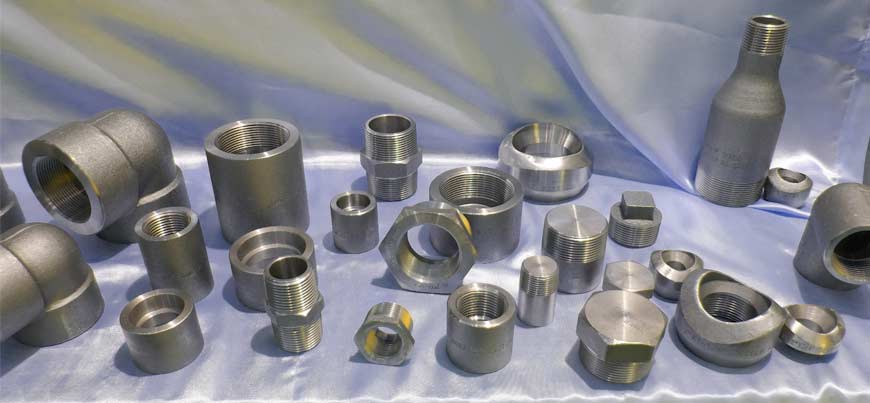
ASTM A350 LF3 Screwed Forged Fittings are commonly manufactured in shapes such as elbows, tees, couplings, unions, plugs, and reducers. These fittings are compatible with standard threaded piping systems. Precision machining ensures accurate threads and dimensional consistency. This reduces installation time and risk of joint failure. Forged construction provides superior resistance to internal pressure. These fittings are suitable for both onshore and offshore applications.Overall, ASTM A350 LF3 Screwed Forged Fittings provide an excellent combination of strength, toughness, and reliability. Their suitability for low-temperature pressure applications makes them highly valuable across industries. Forged construction ensures superior mechanical integrity. Screwed ends simplify installation and maintenance. These fittings meet strict quality and safety requirements. They remain a trusted solution for critical piping systems.
In oil and gas industries, ASTM A350 LF3 fittings are used in low-temperature flow lines and pressure systems. They perform reliably in upstream, midstream, and downstream operations. Their high strength supports elevated pressure ratings. The fittings resist cracking caused by thermal stress and mechanical loading. Screwed connections simplify assembly in remote locations. This makes them practical for field installations.
Petrochemical and chemical processing plants also utilize ASTM A350 LF3 Screwed Forged Fittings extensively. These fittings handle low-temperature chemicals and gases without compromising structural integrity. Their resistance to brittle fracture enhances plant safety. Forged steel construction ensures uniform material properties throughout the fitting. Threaded ends allow easy replacement during maintenance. This reduces system downtime and operational costs.
ASTM A350 LF3 fittings are also suitable for power generation applications involving low-temperature steam or condensate systems. They provide reliable performance under fluctuating pressure and temperature conditions. The material’s toughness ensures stable operation during startup and shutdown cycles. Screwed fittings allow flexible system modifications. Forged bodies withstand cyclic stresses effectively. This improves overall system efficiency and safety.
| Property | Specification Details |
|---|---|
| Standard | ASTM A350 / ASME SA350 |
| Grade | LF3 |
| Material Type | Low-Temperature Carbon Steel |
| Product Form | Screwed Forged Fittings |
| Manufacturing Process | Forged |
| Heat Treatment | Normalized or Normalized Tempered |
| Temperature Service Range | Low Temperature Service |
| Applicable Dimensions Standard | ASME B16.11 |
| Thread Standard | ASME B1.20.1 (NPT) |
| Pressure Class | Class 2000, 3000, 6000 |
| Testing Requirements | Chemical Analysis, Mechanical Tests, Charpy Impact Test |
| Surface Finish | Black, Machined, or As Specified |
| Inspection | Visual, Dimensional, NDT (If Required) |
| Certification | Mill Test Certificate as per EN 10204 3.1 |
| Typical Applications | Oil Gas, Petrochemical, Power Plants, Low-Temperature Pipelines |
Quality control is a critical aspect of ASTM A350 LF3 Screwed Forged Fittings manufacturing. Each fitting undergoes chemical analysis and mechanical testing. Impact tests confirm suitability for low-temperature service. Dimensional inspection ensures compliance with applicable standards. Non-destructive testing may be applied when required by the project. These procedures guarantee consistent product performance.ASTM A350 LF3 fittings conform to various international standards for threaded and forged components. They are typically manufactured in accordance with ASME B16.11 and MSS specifications. This ensures compatibility with global piping systems. Standardized dimensions simplify procurement and installation. The fittings are available in various pressure classes. This allows engineers to select suitable components for specific duties.
The chemical composition of ASTM A350 LF3 steel is optimized for strength and toughness. Controlled carbon content improves weldability and ductility. Alloying elements enhance mechanical performance without compromising impact resistance. This balance is essential for low-temperature pressure applications. Forged fittings benefit from uniform material distribution. This results in predictable and reliable in-service behavior.
Compared to cast fittings, ASTM A350 LF3 Screwed Forged Fittings offer superior mechanical properties. Forging eliminates internal voids and porosity. This significantly improves pressure-handling capability. Screwed connections provide ease of assembly without specialized welding. These advantages make forged fittings a cost-effective long-term solution. They reduce the risk of unexpected failures.
ASTM A350 LF3 fittings are suitable for use in cold regions and cryogenic-adjacent applications. Although not true cryogenic steel, LF3 performs well at moderately low temperatures. It offers a higher strength option for demanding services. The fittings maintain integrity under thermal contraction. This ensures leak-free operation in cold environments. Their reliability supports continuous process operations.
| Element | Composition (%) |
|---|---|
| Carbon (C) | 0.30 max |
| Manganese (Mn) | 0.60 – 1.35 |
| Phosphorus (P) | 0.035 max |
| Sulfur (S) | 0.040 max |
| Silicon (Si) | 0.15 – 0.35 |
| Nickel (Ni) | 3.00 – 3.75 |
| Chromium (Cr) | 0.50 max |
| Molybdenum (Mo) | 0.12 max |
| Copper (Cu) | 0.40 max |
| Iron (Fe) | Balance |
| Property | Requirement |
|---|---|
| Tensile Strength | 585 MPa (85 ksi) min |
| Yield Strength (0.2% Offset) | 380 MPa (55 ksi) min |
| Elongation | 22% min |
| Reduction of Area | 35% min |
| Impact Test Temperature | -46°C (-50°F) |
| Charpy V-Notch Impact Value | 27 J (20 ft-lbf) min (Average of Three Specimens) |
| Hardness | Not Specified (As per Heat Treatment) |
| Heat Treatment Condition | Normalized or Normalized Tempered |
| Nominal Pipe Size (NPS) | Pressure Class | Outside Diameter (mm) | Center to End (mm) | Thread Type | Applicable Standard |
|---|---|---|---|---|---|
| 1/2" | 2000 / 3000 / 6000 | 21.34 | 16 | NPT | ASME B16.11 |
| 3/4" | 2000 / 3000 / 6000 | 26.67 | 19 | NPT | ASME B16.11 |
| 1" | 2000 / 3000 / 6000 | 33.40 | 22 | NPT | ASME B16.11 |
| 1 1/4" | 2000 / 3000 / 6000 | 42.16 | 27 | NPT | ASME B16.11 |
| 1 1/2" | 2000 / 3000 / 6000 | 48.26 | 30 | NPT | ASME B16.11 |
| 2" | 2000 / 3000 / 6000 | 60.33 | 35 | NPT | ASME B16.11 |
| 2 1/2" | 3000 / 6000 | 73.03 | 44 | NPT | ASME B16.11 |
| 3" | 3000 / 6000 | 88.90 | 51 | NPT | ASME B16.11 |
| 4" | 3000 / 6000 | 114.30 | 64 | NPT | ASME B16.11 |
| Standard | Equivalent Grade | Description |
|---|---|---|
| ASTM / ASME | ASTM A350 LF3 / ASME SA350 LF3 | Low-temperature carbon steel forging grade for pressure-retaining parts |
| ASTM | ASTM A182 F22 (Partial) | Comparable strength range, but alloy steel with chromium-molybdenum content |
| EN | EN 10222-4 11NiMo3 | Nickel alloy steel suitable for low-temperature pressure equipment |
| DIN | DIN 1.6311 | Low-temperature nickel alloy steel forging grade |
| BS | BS 1503 682EM | Carbon-manganese steel for low-temperature service |
| ISO | ISO 9327-4 | Low-temperature pressure vessel steel specification |
| JIS | JIS G3204 SNCM | Nickel-chromium-molybdenum alloy steel for structural applications |
ASTM A350 LF3 Screwed & Forged Fittings are low-temperature carbon steel fittings designed for threaded and forged piping connections. They are widely used in oil & gas, chemical, and power industries where low-temperature toughness and reliability are critical for safe piping operations.
This standard includes elbows, tees, reducers, caps, couplings, and other screwed or forged fittings. Both types ensure leak-proof connections and reliable performance in low-temperature and critical piping systems.
ASTM A350 LF3 fittings are made from carbon steel containing carbon, manganese, phosphorus, sulfur, and silicon. This chemical composition provides excellent low-temperature toughness, strength, and weldability for industrial piping applications.
These fittings offer high tensile and yield strength, good elongation, and exceptional impact toughness at low temperatures. They are suitable for critical piping applications where cold-temperature brittleness must be avoided.
Yes, forged fittings can be welded using standard procedures while maintaining low-temperature toughness. Screwed (threaded) fittings are typically not welded and are used for mechanical screw connections to provide safe, reliable joints.
These fittings are available in sizes ranging from ½ inch to 48 inches, covering small to large industrial pipelines. This ensures versatility for low-temperature, critical, and high-pressure piping systems.
LF3 carbon steel fittings offer moderate corrosion resistance. For highly corrosive or chemical environments, protective coatings or alternative alloys may be required to ensure long service life and prevent premature failure.
These fittings undergo dimensional inspections, hydrostatic testing, and impact testing at low temperatures. This ensures compliance with ASTM standards and guarantees safe operation in sub-zero piping applications.
Industries such as oil & gas, chemical processing, power generation, and cryogenic systems commonly use ASTM A350 LF3 fittings due to their excellent low-temperature toughness, high reliability, and suitability for critical piping applications.
ASTM A350 LF3 fittings comply with ASTM A350/A350M standards for low-temperature carbon steel and conform to ASME B16.11 dimensional standards for screwed and forged fittings. This ensures compatibility, safety, and reliable performance in low-temperature service.
We export steel pipes and tubes to over 60 countries worldwide, serving clients across Asia, Europe, the Middle East, Africa, Oceania, and the Americas. Our strong global logistics network ensures reliable delivery, quality assurance, and compliance with international standards.
Export Destinations Include:
Afghanistan, Albania, Andorra, Angola, Austria, Australia, Bahrain, Bangladesh,
Bhutan, Brazil, Brunei, Belarus, Belgium, Bulgaria, Cambodia, China, Cyprus,
Croatia, Czech Republic, Canada, Denmark, Estonia, Egypt, Finland, France,
Germany, Greece, Georgia, Hungary, Iceland, Ireland, Italy, Indonesia, Iran,
Iraq, Israel, Japan, Jordan, Kazakhstan, Kuwait, Kyrgyzstan, Lebanon, Latvia,
Latin America, Liechtenstein, Lithuania, Luxembourg, Malta, Madagascar, Mexico,
Moldova, Monaco, Malaysia, Maldives, Mongolia, Myanmar (Burma), Nepal,
New Zealand, North Korea, Netherlands, Norway, Nigeria, Oman, Poland, Portugal,
Pakistan, Palestine, Philippines, Qatar, Russia, Romania, San Marino,
Serbia and Montenegro, Slovakia, Slovenia, Spain, Sweden, Switzerland,
Saudi Arabia, Singapore, South Korea, South Africa, Sri Lanka, Sudan, Syria,
Taiwan, Tanzania, Tajikistan, Thailand, Turkey, Turkmenistan, Ukraine,
United Kingdom, United Arab Emirates (UAE), Uzbekistan, Venezuela, Vietnam,
Yemen, and more.

