
ASTM A694 F42/F46/F52/F56/F60/F65/F70 Carbon Steel Forged Fittings are high-strength, high-yield pipe fittings widely used in oil & gas, petrochemical, chemical, and industrial piping systems. These fittings are forged from premium carbon steel to ensure durability and reliability under extreme pressure and temperature conditions. They are designed to handle critical applications where standard fittings would fail. These forged fittings comply with ASTM A694 standards, which define the chemical and mechanical properties required for high-yield carbon steel. Each grade, from F42 to F70, offers a specific minimum yield strength, allowing engineers to select the most appropriate fitting for their piping system based on operating pressure and safety requirements.
Forged fittings types include elbows, tees, reducers, caps, and couplings, offering versatile solutions for connecting pipes, changing flow direction, or reducing pipe sizes. They are available in both butt weld and socket weld designs, ensuring secure and leak-proof joints for industrial pipelines. Chemical composition of ASTM A694 forged fittings includes carefully controlled carbon, manganese, phosphorus, sulfur, silicon, and alloying elements. These elements provide the fittings with excellent toughness, strength, and weldability. Higher grades, such as F65 and F70, offer enhanced tensile strength suitable for high-pressure transmission pipelines.
Mechanical properties include minimum yield strength, tensile strength, elongation, and hardness. For example, F42 has a minimum yield of 42 ksi, while F70 reaches up to 70 ksi. These properties ensure the fittings can withstand heavy loads, vibrations, and high-pressure fluids without deformation or failure. Weldability is a significant advantage of ASTM A694 forged fittings. Lower grades can be welded using conventional techniques, while higher grades may require controlled preheating or post-weld heat treatment. Proper welding ensures leak-free joints and long-term operational safety in pipelines.
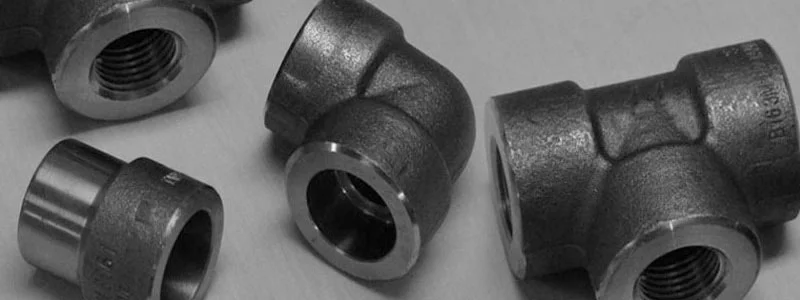
Heat treatment enhances the mechanical properties and internal structure of forged fittings. Processes like normalizing, quenching, and tempering relieve internal stresses, improve toughness, and prevent cracking under extreme service conditions. This makes the fittings reliable for long-term use in industrial systems. Dimensional accuracy is maintained according to ASME and ASTM standards. Fittings are produced in various sizes, with precise dimensions for diameter, wall thickness, and radius of curvature for elbows. Standard compliance ensures compatibility with piping systems and ease of installation.
Corrosion resistance of ASTM A694 carbon steel fittings is moderate, but can be improved with coatings, painting, or lining in aggressive environments. They are suitable for oil, gas, and water pipelines and can work with compatible materials to prevent galvanic corrosion. Applications span oil & gas pipelines, refineries, chemical plants, power generation, and high-pressure industrial processes. They are ideal for high-yield, high-pressure services where safety, performance, and durability are critical.
Installation requires careful alignment, proper bolt torqueing (for flanged fittings), and use of compatible gaskets. Butt weld fittings must follow correct welding procedures to maintain integrity and prevent leakage under high pressure and temperature. Testing and inspection are crucial to ensure quality. ASTM A694 forged fittings undergo chemical analysis, mechanical testing, and non-destructive testing such as ultrasonic or magnetic particle inspection. Pressure testing ensures they meet high-pressure performance standards.
| Grade | Minimum Yield Strength (ksi / MPa) | Minimum Tensile Strength (ksi / MPa) | Elongation (%) | Hardness (HB) | Application |
|---|---|---|---|---|---|
| F42 | 42 / 290 | 60 / 415 | 20 | 187 | Moderate-pressure pipelines, oil & gas, industrial use |
| F46 | 46 / 315 | 65 / 450 | 20 | 197 | Medium-pressure pipelines, chemical plants |
| F52 | 52 / 360 | 70 / 485 | 18 | 207 | High-pressure pipelines, oil & gas transport |
| F56 | 56 / 385 | 75 / 515 | 18 | 217 | High-pressure transmission lines, refineries |
| F60 | 60 / 415 | 80 / 550 | 16 | 227 | Critical high-pressure industrial service |
| F65 | 65 / 450 | 85 / 585 | 16 | 237 | Ultra high-pressure pipelines, oil & gas applications |
| F70 | 70 / 485 | 90 / 620 | 15 | 247 | Extreme high-pressure pipelines and industrial systems |
Grades comparison helps in selecting the right fitting. F42 and F46 are used in moderate-pressure pipelines, while F52 through F70 are preferred for high and ultra-high-pressure applications. Higher grades provide better tensile strength, hardness, and durability. Maintenance of forged fittings involves regular inspections for corrosion, wear, and joint integrity. Proper maintenance ensures longevity, reduces downtime, and prevents leaks in high-pressure pipelines, especially in oil & gas and chemical industries.
Advantages of ASTM A694 forged fittings include high yield strength, excellent toughness, reliable weldability, dimensional accuracy, and suitability for extreme service conditions. These features make them indispensable in high-pressure and high-temperature applications. Conclusion: ASTM A694 F42/F46/F52/F56/F60/F65/F70 Carbon Steel Forged Fittings provide a dependable solution for industrial pipelines. They combine high strength, toughness, and precise engineering, ensuring safety and performance in demanding environments. Selecting the appropriate grade guarantees optimal operation and longevity of piping systems.
| Grade | C (Carbon) | Mn (Manganese) | P (Phosphorus) | S (Sulfur) | Si (Silicon) | Cu (Copper) | Ni (Nickel) | Cr (Chromium) | Mo (Molybdenum) |
|---|---|---|---|---|---|---|---|---|---|
| F42 | 0.18-0.26 | 1.00-1.50 | ≤0.030 | ≤0.030 | ≤0.15 | ≤0.25 | ≤0.25 | 0.15-0.30 | 0.05-0.10 |
| F46 | 0.18-0.26 | 1.00-1.50 | ≤0.030 | ≤0.030 | ≤0.15 | ≤0.25 | ≤0.25 | 0.20-0.35 | 0.06-0.12 |
| F52 | 0.18-0.26 | 1.00-1.50 | ≤0.030 | ≤0.030 | ≤0.15 | ≤0.25 | ≤0.25 | 0.25-0.40 | 0.07-0.15 |
| F56 | 0.18-0.26 | 1.00-1.50 | ≤0.030 | ≤0.030 | ≤0.15 | ≤0.25 | ≤0.25 | 0.30-0.45 | 0.08-0.16 |
| F60 | 0.18-0.26 | 1.00-1.50 | ≤0.030 | ≤0.030 | ≤0.15 | ≤0.25 | ≤0.25 | 0.35-0.50 | 0.09-0.18 |
| F65 | 0.18-0.26 | 1.00-1.50 | ≤0.030 | ≤0.030 | ≤0.15 | ≤0.25 | ≤0.25 | 0.40-0.55 | 0.10-0.20 |
| F70 | 0.18-0.26 | 1.00-1.50 | ≤0.030 | ≤0.030 | ≤0.15 | ≤0.25 | ≤0.25 | 0.45-0.60 | 0.12-0.22 |
| Grade | Minimum Yield Strength (ksi / MPa) | Minimum Tensile Strength (ksi / MPa) | Elongation (%) | Hardness (HB) | Impact Test (Charpy V-notch, ft-lb / J) |
|---|---|---|---|---|---|
| F42 | 42 / 290 | 60 / 415 | 20 | 187 | ≥20 / 27 |
| F46 | 46 / 315 | 65 / 450 | 20 | 197 | ≥20 / 27 |
| F52 | 52 / 360 | 70 / 485 | 18 | 207 | ≥18 / 24 |
| F56 | 56 / 385 | 75 / 515 | 18 | 217 | ≥18 / 24 |
| F60 | 60 / 415 | 80 / 550 | 16 | 227 | ≥16 / 22 |
| F65 | 65 / 450 | 85 / 585 | 16 | 237 | ≥16 / 22 |
| F70 | 70 / 485 | 90 / 620 | 15 | 247 | ≥15 / 20 |
| Fitting Type | Nominal Size (inches) | Outside Diameter (OD, mm) | Center-to-End (mm) | Wall Thickness (mm) | Radius (for Elbows, mm) |
|---|---|---|---|---|---|
| Elbow 45° / 90° | 1/2" - 24" | 21.3 - 609.6 | 38 - 450 | 3 - 45 | 1D / 1.5D |
| Tee (Equal / Reducing) | 1/2" - 24" | 21.3 - 609.6 | 38 - 500 | 3 - 45 | N/A |
| Reducer (Concentric / Eccentric) | 1/2" - 24" | 21.3 - 609.6 | 38 - 450 | 3 - 45 | N/A |
| Cap | 1/2" - 24" | 21.3 - 609.6 | 38 - 200 | 3 - 45 | N/A |
| ASTM A694 Grade | UNS No. | EN / DIN | JIS | BS / Other |
|---|---|---|---|---|
| F42 | K04200 | 1.0420 | ST42 | BS 1504-42 |
| F46 | K04600 | 1.0460 | ST46 | BS 1504-46 |
| F52 | K05200 | 1.0520 | ST52 | BS 1504-52 |
| F56 | K05600 | 1.0560 | ST56 | BS 1504-56 |
| F60 | K06000 | 1.0600 | ST60 | BS 1504-60 |
| F65 | K06500 | 1.0650 | ST65 | BS 1504-65 |
| F70 | K07000 | 1.0700 | ST70 | BS 1504-70 |
ASTM A694 Forged Fittings are high-strength, low-alloy carbon steel fittings designed for high-pressure and high-temperature welded piping systems. The grades F42 through F70 indicate increasing minimum yield strength, making them suitable for severe service in oil & gas, petrochemical, and power industries.
This specification covers elbows, tees, reducers, caps, and other forged fittings. All are designed for butt-weld connections, providing safe, leak-proof, and durable joints in high-pressure piping systems.
ASTM A694 forged fittings are made from low-alloy carbon steel containing carbon, manganese, phosphorus, sulfur, silicon, and small amounts of chromium or molybdenum. This composition ensures high strength, toughness, and resistance to cracking under high-pressure conditions.
These fittings provide high tensile and yield strength according to grade (F42–F70), good elongation, and impact toughness. They are suitable for severe service in high-pressure pipelines, ensuring durability and safety under extreme operating conditions.
Yes, these fittings are designed for butt-weld connections. Proper welding procedures, including preheating and post-weld heat treatment where required, maintain the mechanical properties and structural integrity for high-pressure service.
ASTM A694 forged fittings are available in nominal pipe sizes ranging from ½ inch to 48 inches, suitable for small and large industrial pipelines, including high-pressure oil & gas and petrochemical systems.
These low-alloy steel fittings offer moderate corrosion resistance. For highly corrosive environments, protective coatings, galvanizing, or alternative alloy steels may be necessary to ensure long-term service life.
Fittings undergo hydrostatic testing, dimensional inspections, and non-destructive testing (NDT) such as radiography or ultrasonic testing. These tests ensure compliance with ASTM and ASME standards and guarantee safe operation in high-pressure systems.
Industries such as oil & gas, petrochemical, chemical processing, and power generation use ASTM A694 forged fittings extensively due to their high strength, durability, and reliability under severe high-pressure and high-temperature conditions.
ASTM A694 forged fittings comply with ASTM A694/A694M standards for low-alloy carbon steel fittings and conform to ASME B16.11 dimensional standards for forged fittings. This ensures compatibility, safety, and reliable performance in high-pressure piping systems.
We export steel pipes and tubes to over 60 countries worldwide, serving clients across Asia, Europe, the Middle East, Africa, Oceania, and the Americas. Our strong global logistics network ensures reliable delivery, quality assurance, and compliance with international standards.
Export Destinations Include:
Afghanistan, Albania, Andorra, Angola, Austria, Australia, Bahrain, Bangladesh,
Bhutan, Brazil, Brunei, Belarus, Belgium, Bulgaria, Cambodia, China, Cyprus,
Croatia, Czech Republic, Canada, Denmark, Estonia, Egypt, Finland, France,
Germany, Greece, Georgia, Hungary, Iceland, Ireland, Italy, Indonesia, Iran,
Iraq, Israel, Japan, Jordan, Kazakhstan, Kuwait, Kyrgyzstan, Lebanon, Latvia,
Latin America, Liechtenstein, Lithuania, Luxembourg, Malta, Madagascar, Mexico,
Moldova, Monaco, Malaysia, Maldives, Mongolia, Myanmar (Burma), Nepal,
New Zealand, North Korea, Netherlands, Norway, Nigeria, Oman, Poland, Portugal,
Pakistan, Palestine, Philippines, Qatar, Russia, Romania, San Marino,
Serbia and Montenegro, Slovakia, Slovenia, Spain, Sweden, Switzerland,
Saudi Arabia, Singapore, South Korea, South Africa, Sri Lanka, Sudan, Syria,
Taiwan, Tanzania, Tajikistan, Thailand, Turkey, Turkmenistan, Ukraine,
United Kingdom, United Arab Emirates (UAE), Uzbekistan, Venezuela, Vietnam,
Yemen, and more.

