
EN 60 grade steel pipes are a type of high-quality carbon steel pipe commonly used in mechanical and structural applications. These pipes are manufactured under strict European standards (EN) to ensure durability, uniformity, and precision in dimensions. They are widely recognized for their excellent strength, toughness, and weldability, making them suitable for pressure systems and industrial piping networks. EN 60 pipes are typically supplied in seamless or welded forms, depending on the application. Their versatility allows them to be used in construction, automotive, and energy sectors. The grade ensures the steel has consistent chemical composition and mechanical properties. These pipes are often chosen for high-pressure and high-temperature applications. They are also known for their resistance to wear and corrosion under moderate conditions.
The chemical composition of EN 60 grade steel primarily consists of carbon, manganese, silicon, sulfur, and phosphorus. Carbon content is controlled to provide a balance between hardness and ductility. Manganese enhances the steel’s tensile strength and hardness. Silicon is added to improve elasticity and strength during heat treatment. Sulfur and phosphorus are kept at minimal levels to avoid brittleness. Some variations may include trace amounts of chromium or nickel for improved corrosion resistance. The uniform composition ensures reliable mechanical performance across different batches. This composition makes EN 60 steel suitable for cold working, machining, and welding processes.
EN 60 grade steel pipes are produced using either seamless or welded manufacturing techniques. Seamless pipes are created through hot extrusion or rotary piercing, offering superior strength and uniformity. Welded pipes are fabricated by rolling steel plates or strips and fusing them using high-frequency welding. Both processes are followed by heat treatment to refine grain structure and improve mechanical properties. After forming, the pipes undergo surface finishing, such as pickling or galvanizing, to enhance corrosion resistance. Precision cutting, beveling, and threading are done according to customer specifications. The production process is strictly monitored to meet EN standards for dimensional tolerance, thickness, and roundness.
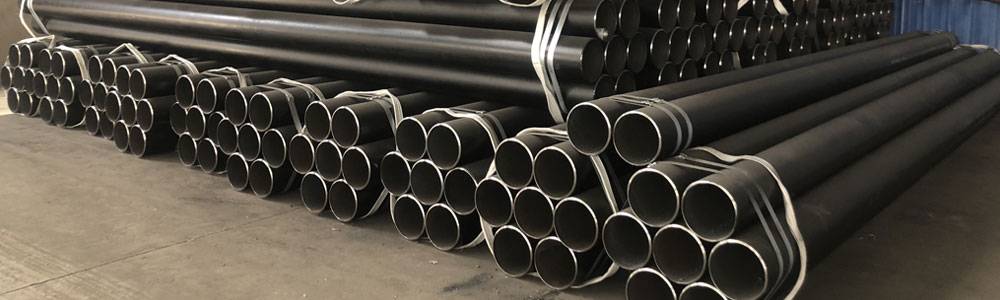
EN 60 grade steel pipes exhibit high tensile strength, yield strength, and elongation properties. The tensile strength ensures the pipe can withstand internal pressures and mechanical loads. Yield strength indicates the material’s ability to resist deformation under stress. Elongation provides ductility, which prevents cracking during installation or operation. Hardness is typically measured to ensure resistance against wear and indentation. Impact toughness is another critical property, particularly for low-temperature applications. The combination of these mechanical properties makes EN 60 pipes suitable for demanding industrial uses.
EN 60 steel pipes are available in a wide range of diameters, wall thicknesses, and lengths. Standard pipe sizes are defined according to EN 10216 and EN 10217 specifications. The dimensional tolerances ensure proper fitment in piping systems without leaks. Lengths can be supplied as standard cut lengths or as random lengths depending on requirements. Wall thickness tolerance is critical for pressure applications, ensuring the pipe can handle the specified operating conditions. Roundness and straightness tolerances are maintained during manufacturing and final inspection. This guarantees uniformity across the piping system.
The surface finish of EN 60 grade steel pipes is smooth and defect-free. Pipes may be supplied with black, galvanized, or painted finishes depending on application. Black pipes are commonly used for general industrial purposes. Galvanized pipes provide enhanced corrosion resistance for outdoor or humid environments. Some applications require pickled and oiled surfaces to prevent rusting during storage and transport. Surface finish quality is crucial to avoid localized corrosion and improve weldability.
| Property | Specification / Value |
|---|---|
| Standard | EN 10216-2 / EN 10217-2 |
| Material Grade | EN 60 |
| Type | Seamless / Welded |
| Pipe Size (Diameter) | 6 mm – 610 mm (or as per EN standard) |
| Wall Thickness | 1.5 mm – 40 mm (depends on diameter) |
| Length | 6 m / 12 m / Random length |
| Surface Finish | Black, Galvanized, Painted, Pickled & Oiled |
| Testing | Chemical analysis, Tensile test, Hardness test, Impact test, Non-destructive testing |
| Applications | Industrial piping, Boiler systems, Structural purposes, Oil & Gas, Automotive |
| Certification | Mill Test Certificate (MTC) as per EN standards |
Heat treatment plays a vital role in enhancing the performance of EN 60 steel pipes. Normalizing, annealing, and quenching processes are used to refine grain structure. These treatments improve mechanical properties like toughness, strength, and hardness. Proper heat treatment also reduces residual stresses from manufacturing. Pipes intended for high-pressure or low-temperature service often undergo additional tempering to balance strength and ductility. The heat treatment process is carefully controlled to meet EN 10216-2 standards.
Although EN 60 steel is not inherently stainless, it offers moderate corrosion resistance in atmospheric or non-aggressive environments. Surface treatments such as galvanization, painting, or coating can further improve corrosion protection. In industrial settings where moisture or chemical exposure is expected, proper maintenance and protective coatings are recommended. Regular inspections ensure long-term performance and prevent premature failure due to rusting.
EN 60 grade steel pipes are widely used in multiple industries. In construction, they serve as structural supports, scaffolding, and pipelines. In oil and gas, they handle medium-pressure fluids and gases. Automotive applications include chassis components and hydraulic systems. Energy and power plants use them in boiler, heat exchanger, and cooling systems. Chemical industries rely on them for conveying non-corrosive chemicals. Their strength, reliability, and cost-effectiveness make them highly versatile.
| Element | Maximum / Typical Content (%) |
|---|---|
| Carbon (C) | 0.18 – 0.25 |
| Manganese (Mn) | 0.50 – 0.80 |
| Silicon (Si) | 0.10 – 0.35 |
| Phosphorus (P) | ≤ 0.035 |
| Sulfur (S) | ≤ 0.035 |
| Chromium (Cr) | ≤ 0.30 (optional, depending on variant) |
| Nickel (Ni) | ≤ 0.30 (optional, depending on variant) |
| Other elements | As per EN 10216-2 tolerances |
| Property | Value / Range | Remarks |
|---|---|---|
| Tensile Strength (Rm) | 410 – 550 MPa | Measured in longitudinal direction |
| Yield Strength (ReH) | ≥ 240 MPa | Minimum yield strength for structural integrity |
| Elongation (A) | ≥ 20% | Measured over 5.65√S0 gauge length |
| Impact Strength (Charpy V-notch) | ≥ 27 J at 20°C | Optional for low-temperature service |
| Hardness (HB) | ≤ 150 HB | Ensures proper machinability and wear resistance |
| Elongation after Fracture | 20–25% | Indicates ductility and deformation capability |
| Modulus of Elasticity | ≈ 210 GPa | Standard for carbon steel |
| Reduction of Area (RA) | ≥ 40% | Indicates uniform deformation before fracture |
| Nominal Diameter (DN / NPS) | Outer Diameter (OD) mm | Wall Thickness (WT) mm | Weight per Meter (kg/m) | Standard Length (m) |
|---|---|---|---|---|
| 15 mm (½") | 21.3 | 2.6 – 3.2 | 1.4 – 1.7 | 6 / 12 |
| 20 mm (¾") | 26.9 | 2.6 – 3.6 | 1.7 – 2.3 | 6 / 12 |
| 25 mm (1") | 33.7 | 3.2 – 4.0 | 2.5 – 3.0 | 6 / 12 |
| 32 mm (1¼") | 42.4 | 3.6 – 4.5 | 3.5 – 4.3 | 6 / 12 |
| 40 mm (1½") | 48.3 | 3.6 – 4.8 | 4.0 – 4.9 | 6 / 12 |
| 50 mm (2") | 60.3 | 4.0 – 5.0 | 5.2 – 6.3 | 6 / 12 |
| 65 mm (2½") | 76.1 | 4.0 – 6.0 | 6.8 – 9.0 | 6 / 12 |
| 80 mm (3") | 88.9 | 4.5 – 6.0 | 8.3 – 10.5 | 6 / 12 |
| 100 mm (4") | 114.3 | 4.5 – 7.0 | 11.0 – 15.0 | 6 / 12 |
| 150 mm (6") | 168.3 | 5.0 – 8.0 | 17.0 – 25.0 | 6 / 12 |
| 200 mm (8") | 219.1 | 5.0 – 9.0 | 24.0 – 35.0 | 6 / 12 |
| 250 mm (10") | 273.0 | 6.0 – 10.0 | 33.0 – 50.0 | 6 / 12 |
| 300 mm (12") | 323.9 | 6.0 – 12.0 | 45.0 – 65.0 | 6 / 12 |
| Standard | Equivalent Grade / Material |
|---|---|
| EN | EN 60 |
| ASTM / ASME | ASTM A106 Grade B / ASTM A53 Grade B |
| DIN / German Standard | St 35.8 / St 37.0 |
| BS / British Standard | BS 1387 – Grade B / BS 6323 |
| JIS / Japanese Standard | JIS G3452 STB 42 / STB 43 |
| ISO | ISO 3183 – Grade B |
| IS / Indian Standard | IS 1239 – Part 1 / IS 3589 – Grade B |
A: EN 60 Grade Steel is a medium-carbon steel known for its excellent tensile strength, wear resistance, and durability. It is widely used in industrial piping, machinery, and structural applications where high strength is required.
A: EN 60 Grade Steel Pipes are commonly used in oil and gas industries, water and gas transportation, construction, pressure vessels, and high-temperature industrial processes due to their robustness and corrosion resistance when properly treated.
A: EN 60 Grade Steel Pipes typically comply with European Standards (EN) such as EN 10216-2 for seamless steel pipes and EN 10210-1 for welded and hot-finished structural pipes, ensuring quality and performance.
A: EN 60 Grade Steel Pipes generally contain Carbon (C) 0.57–0.65%, Manganese (Mn) 0.60–0.90%, Silicon (Si) 0.15–0.35%, Phosphorus (P) max 0.035%, and Sulfur (S) max 0.035%. Minor alloying elements may be present depending on the manufacturer.
A: These pipes usually have a tensile strength of 600–750 MPa, yield strength of 370–500 MPa, and elongation of 12–18%. They provide excellent hardness and wear resistance for industrial applications.
A: Yes, EN 60 Grade Steel Pipes can be welded using standard techniques such as SMAW, GTAW, and GMAW. Preheating may be required to avoid cracking due to the medium-carbon content.
A: EN 60 Grade Steel Pipes have good strength at moderate temperatures. However, for very high-temperature applications, it is recommended to consult the manufacturer for heat treatment or alternative grades to ensure safe operation.
A: EN 60 Grade Steel Pipes are available in a wide range of diameters from 10mm to 600mm, with wall thicknesses ranging from 2mm to 50mm. Custom sizes can also be manufactured as per project requirements.
A: Pipes should be stored in a dry, covered area to prevent corrosion. If outdoor storage is necessary, they should be elevated from the ground and covered with waterproof materials. Periodic inspection and rust prevention coating are recommended.
A: Always source pipes from certified manufacturers with proper EN certifications. Check material test reports (MTRs), chemical composition, mechanical properties, and dimensional accuracy to ensure compliance with required standards.
We export steel pipes and tubes to over 60 countries worldwide, serving clients across Asia, Europe, the Middle East, Africa, Oceania, and the Americas. Our strong global logistics network ensures reliable delivery, quality assurance, and compliance with international standards.
Export Destinations Include:
Afghanistan, Albania, Andorra, Angola, Austria, Australia, Bahrain, Bangladesh,
Bhutan, Brazil, Brunei, Belarus, Belgium, Bulgaria, Cambodia, China, Cyprus,
Croatia, Czech Republic, Canada, Denmark, Estonia, Egypt, Finland, France,
Germany, Greece, Georgia, Hungary, Iceland, Ireland, Italy, Indonesia, Iran,
Iraq, Israel, Japan, Jordan, Kazakhstan, Kuwait, Kyrgyzstan, Lebanon, Latvia,
Latin America, Liechtenstein, Lithuania, Luxembourg, Malta, Madagascar, Mexico,
Moldova, Monaco, Malaysia, Maldives, Mongolia, Myanmar (Burma), Nepal,
New Zealand, North Korea, Netherlands, Norway, Nigeria, Oman, Poland, Portugal,
Pakistan, Palestine, Philippines, Qatar, Russia, Romania, San Marino,
Serbia and Montenegro, Slovakia, Slovenia, Spain, Sweden, Switzerland,
Saudi Arabia, Singapore, South Korea, South Africa, Sri Lanka, Sudan, Syria,
Taiwan, Tanzania, Tajikistan, Thailand, Turkey, Turkmenistan, Ukraine,
United Kingdom, United Arab Emirates (UAE), Uzbekistan, Venezuela, Vietnam,
Yemen, and more.

