
Hastelloy C22 Pipes are manufactured from a nickel-chromium-molybdenum alloy that offers one of the highest levels of corrosion resistance available among nickel alloys. The alloy is specifically designed to resist pitting, crevice corrosion, and stress corrosion cracking. These pipes perform exceptionally well in oxidizing and reducing environments simultaneously. Due to this balanced chemistry, Hastelloy C22 is widely preferred in aggressive chemical processing systems. The material maintains stability even when exposed to chlorides and halides. Its versatility makes it suitable for a wide range of industrial applications. Hastelloy C22 pipes ensure long service life and reduced maintenance costs.
One of the major advantages of Hastelloy C22 pipes is their superior resistance to localized corrosion. Unlike many conventional alloys, C22 resists pitting and crevice corrosion even at high temperatures. This makes it ideal for equipment exposed to stagnant or low-flow corrosive media. The high chromium content provides excellent protection against oxidizing chemicals. At the same time, molybdenum enhances resistance to reducing acids. This dual resistance capability is a key reason for its popularity. Industries rely on Hastelloy C22 pipes for critical and safety-sensitive operations.
Hastelloy C22 pipes are commonly used in chemical processing industries where aggressive acids are handled. They perform well in sulfuric, hydrochloric, nitric, and phosphoric acid environments. The alloy also shows outstanding resistance to wet chlorine gas and chlorine dioxide. These properties make the pipes suitable for reactors, heat exchangers, and transfer lines. They help prevent contamination and material failure. The reliability of Hastelloy C22 reduces downtime in chemical plants. This results in improved operational efficiency.In the oil and gas industry, Hastelloy C22 pipes are valued for their ability to withstand sour gas conditions. They resist corrosion caused by hydrogen sulfide and chlorides present in offshore environments. The pipes are often used in downhole tubing and process piping systems. Their durability ensures safe transportation of corrosive fluids. Even under high pressure and temperature, the material maintains integrity. This makes Hastelloy C22 a trusted choice for harsh extraction conditions. Long-term performance is a major benefit.
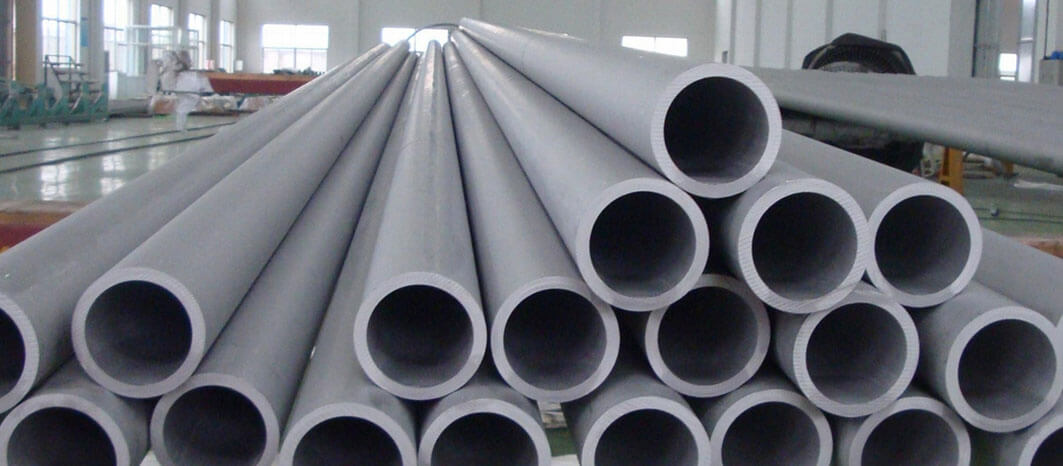
Hastelloy C22 pipes also find extensive use in marine and seawater applications. The alloy resists seawater corrosion, biofouling, and crevice attack effectively. This makes it suitable for desalination plants and offshore platforms. The material does not suffer rapid degradation in saline conditions. Its strength and corrosion resistance reduce the need for frequent replacements. Marine engineers prefer Hastelloy C22 for critical piping systems. It ensures reliability in challenging ocean environments. The pharmaceutical and food processing industries use Hastelloy C22 pipes due to their high purity and corrosion resistance. These pipes prevent contamination during processing of sensitive products. They are easy to clean and maintain, meeting strict hygiene standards. The alloy does not react with process chemicals. This ensures product quality and consistency. Hastelloy C22 pipes support clean-in-place systems efficiently. Their smooth surface finish further enhances cleanliness.
Hastelloy C22 pipes are available in both seamless and welded forms. Seamless pipes are preferred for high-pressure and high-temperature applications. Welded pipes offer cost efficiency for larger diameters. Both forms provide excellent mechanical properties. Pipes can be supplied in various schedules and wall thicknesses. Custom lengths are also available as per project requirements. This flexibility makes them suitable for diverse industries.The mechanical properties of Hastelloy C22 pipes remain stable across a wide temperature range. The alloy exhibits good tensile strength and yield strength. It also offers excellent ductility, allowing for easier fabrication. Even after prolonged exposure to heat, the material retains toughness. This reduces the risk of cracking during operation. Engineers trust Hastelloy C22 for demanding mechanical conditions. Its performance contributes to overall system safety.
Welding Hastelloy C22 pipes is relatively easy compared to other high-alloy materials. The alloy can be welded using standard welding techniques. No post-weld heat treatment is usually required. This simplifies installation and reduces fabrication time. Proper filler materials ensure strong and corrosion-resistant welds. The weld zones retain corrosion resistance similar to the base metal. This makes Hastelloy C22 highly fabrication-friendly. Hastelloy C22 pipes comply with international standards such as ASTM B622, ASTM B619, and ASTM B626. These standards ensure consistency in quality and performance. Pipes undergo rigorous testing before delivery. Tests include chemical analysis, mechanical testing, and non-destructive examinations. Hydrostatic and eddy current tests are also performed. Certification ensures reliability for critical applications. Customers benefit from assured quality.
| Specification – Hastelloy C22 Pipes | |
|---|---|
| Material Grade | Hastelloy C22 / Alloy C22 |
| UNS Number | N06022 |
| Standard | ASTM B622, ASTM B619, ASTM B626 |
| Pipe Type | Seamless / Welded |
| Size Range | 1/8” NB to 24” NB |
| Wall Thickness | SCH 5, SCH 10, SCH 20, SCH 40, SCH 80, SCH 160, XXS |
| Length | Single Random, Double Random, Cut Length |
| Manufacturing Process | Cold Drawn / Hot Finished / ERW / EFW |
| Surface Finish | Annealed & Pickled, Polished, Bright Annealed |
| Heat Treatment | Solution Annealed |
| Testing | Chemical Analysis, Mechanical Testing, Hydrostatic Test, Eddy Current Test, NDT |
| Certification | Mill Test Certificate as per EN 10204 3.1 |
| Applications | Chemical Processing, Oil & Gas, Marine, Pharmaceutical, Pollution Control |
Pollution control and waste treatment plants extensively use Hastelloy C22 pipes. These environments often involve highly corrosive gases and liquids. The alloy resists corrosion caused by mixed chemical waste. This ensures long-term operational stability. Hastelloy C22 pipes help meet environmental safety regulations. Their durability reduces leakage risks. This contributes to safer and cleaner operations.Heat exchangers and condensers frequently use Hastelloy C22 pipes due to their thermal stability. The material performs well under rapid temperature changes. It resists corrosion caused by process fluids and cooling media. This enhances heat transfer efficiency over time. Reduced scaling and corrosion improve performance. Maintenance requirements are significantly lower. These benefits make Hastelloy C22 ideal for thermal systems.
The alloy’s resistance to stress corrosion cracking is a key feature of Hastelloy C22 pipes. This property is especially important in chloride-rich environments. The pipes remain reliable even under tensile stress. This minimizes the risk of sudden failure. Long service life improves overall plant safety. Engineers rely on this property for critical installations. It adds confidence to system design.Hastelloy C22 pipes can be supplied with various surface finishes. Options include pickled, annealed, polished, or bright finished surfaces. The choice depends on application requirements. Smooth finishes improve corrosion resistance and cleanliness. Customized finishes enhance aesthetic and functional performance. Suppliers can meet specific project demands. This adaptability increases the alloy’s usability.
Overall, Hastelloy C22 pipes represent a premium solution for highly corrosive environments. Their unmatched corrosion resistance, strength, and versatility set them apart. Industries choose them for reliability and long-term cost savings. The alloy performs consistently in extreme conditions. Reduced maintenance and downtime add value. Hastelloy C22 pipes support safe and efficient operations. They remain a top choice for critical industrial applications.
| Chemical Composition – Hastelloy C22 Pipes (%) | |
|---|---|
| Nickel (Ni) | Balance |
| Chromium (Cr) | 20.0 – 22.5 |
| Molybdenum (Mo) | 12.5 – 14.5 |
| Iron (Fe) | 2.0 – 6.0 |
| Tungsten (W) | 2.5 – 3.5 |
| Cobalt (Co) | ≤ 2.5 |
| Carbon (C) | ≤ 0.010 |
| Manganese (Mn) | ≤ 0.50 |
| Silicon (Si) | ≤ 0.08 |
| Phosphorus (P) | ≤ 0.02 |
| Sulfur (S) | ≤ 0.02 |
| Vanadium (V) | ≤ 0.35 |
| Mechanical Properties – Hastelloy C22 Pipes | |
|---|---|
| Tensile Strength | ≥ 690 MPa |
| Yield Strength (0.2% Offset) | ≥ 310 MPa |
| Elongation | ≥ 45% |
| Hardness | ≤ 95 HRB |
| Modulus of Elasticity | ~ 205 GPa |
| Density | ~ 8.69 g/cm³ |
| Impact Strength | Excellent (Maintains toughness at low temperatures) |
| High Temperature Performance | Good strength retention at elevated temperatures |
| Dimension Chart – Hastelloy C22 Pipes | ||||
|---|---|---|---|---|
| Nominal Pipe Size (NPS) | Outside Diameter (mm) | SCH 10 (mm) | SCH 40 (mm) | SCH 80 (mm) |
| 1/2" | 21.34 | 2.11 | 2.77 | 3.73 |
| 3/4" | 26.67 | 2.11 | 2.87 | 3.91 |
| 1" | 33.40 | 2.77 | 3.38 | 4.55 |
| 1 1/2" | 48.26 | 2.77 | 3.68 | 5.08 |
| 2" | 60.33 | 2.77 | 3.91 | 5.54 |
| 3" | 88.90 | 3.05 | 5.49 | 7.62 |
| 4" | 114.30 | 3.05 | 6.02 | 8.56 |
| 6" | 168.28 | 3.40 | 7.11 | 10.97 |
| 8" | 219.08 | 3.76 | 8.18 | 12.70 |
| 10" | 273.05 | 4.19 | 9.27 | 15.09 |
| Equivalent Grades – Hastelloy C22 Pipes | |
|---|---|
| Standard | Equivalent Grade |
| UNS | N06022 |
| ASTM | Hastelloy C22 / Alloy C22 |
| DIN | 2.4602 |
| EN | NiCr21Mo14W |
| ISO | NiCr21Mo14W |
| AFNOR | NC22DNb |
| WNR | Werkstoff Nr. 2.4602 |
| JIS | – (Closest Equivalent) |
Hastelloy C22 pipe is a nickel-chromium-molybdenum alloy pipe known for its exceptional resistance to pitting, crevice corrosion, and stress corrosion cracking in aggressive environments.
Hastelloy C22 pipes are widely used in chemical processing, pharmaceutical industries, pollution control, pulp and paper plants, and marine applications.
These pipes are commonly manufactured according to ASTM B622, ASTM B619, ASTM B626, and ASTM B516 standards.
Yes, Hastelloy C22 pipes perform well at elevated temperatures while maintaining excellent mechanical strength and corrosion resistance.
Hastelloy C22 pipes are available in seamless, welded, ERW, and fabricated forms with various sizes and wall thicknesses.
Yes, Hastelloy C22 offers outstanding resistance to chloride-induced pitting and crevice corrosion, even in harsh chemical conditions.
Hastelloy C22 pipes have excellent weldability using standard welding techniques without the risk of solidification cracking.
They are generally supplied in solution annealed condition to ensure optimal corrosion resistance and mechanical properties.
We export steel pipes and tubes to over 10297 countries worldwide, serving clients across Asia, Europe, the Middle East, Africa, Oceania, and the Americas. Our strong global logistics network ensures reliable delivery, quality assurance, and compliance with international standards.
Export Destinations Include:
Afghanistan, Albania, Andorra, Angola, Austria, Australia, Bahrain, Bangladesh,
Bhutan, Brazil, Brunei, Belarus, Belgium, Bulgaria, Cambodia, China, Cyprus,
Croatia, Czech Republic, Canada, Denmark, Estonia, Egypt, Finland, France,
Germany, Greece, Georgia, Hungary, Iceland, Ireland, Italy, Indonesia, Iran,
Iraq, Israel, Japan, Jordan, Kazakhstan, Kuwait, Kyrgyzstan, Lebanon, Latvia,
Latin America, Liechtenstein, Lithuania, Luxembourg, Malta, Madagascar, Mexico,
Moldova, Monaco, Malaysia, Maldives, Mongolia, Myanmar (Burma), Nepal,
New Zealand, North Korea, Netherlands, Norway, Nigeria, Oman, Poland, Portugal,
Pakistan, Palestine, Philippines, Qatar, Russia, Romania, San Marino,
Serbia and Montenegro, Slovakia, Slovenia, Spain, Sweden, Switzerland,
Saudi Arabia, Singapore, South Korea, South Africa, Sri Lanka, Sudan, Syria,
Taiwan, Tanzania, Tajikistan, Thailand, Turkey, Turkmenistan, Ukraine,
United Kingdom, United Arab Emirates (UAE), Uzbekistan, Venezuela, Vietnam,
Yemen, and more.

