
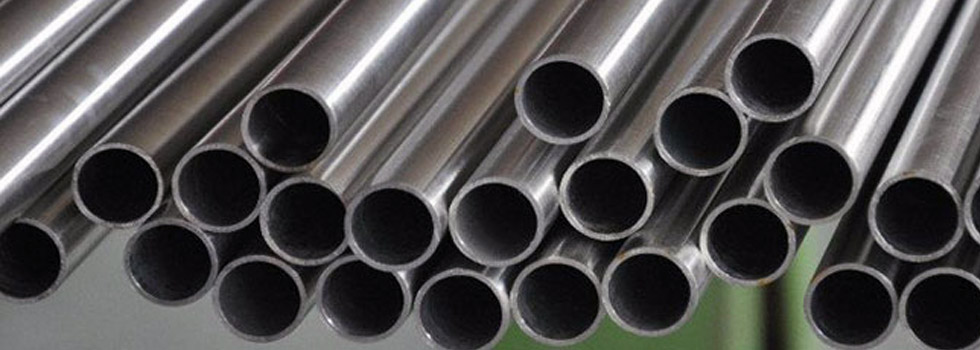
Monel 400 is a nickel-copper alloy pipe renowned for its exceptional strength and corrosion resistance. It is widely used in industries where exposure to seawater, chemicals, and acidic environments is common. The alloy typically contains about 67% nickel and 30% copper, with small amounts of iron, manganese, and carbon. Monel 400 pipes combine excellent mechanical properties with high toughness across a broad temperature range. They are non-magnetic, making them suitable for applications requiring minimal magnetic interference. These pipes are extensively utilized in marine engineering, chemical processing, and aerospace industries. The superior resistance to oxidation and scaling makes them highly durable. Monel 400’s uniform composition ensures consistent performance under extreme conditions.
Monel 400 pipes offer a combination of corrosion resistance and mechanical strength that sets them apart. They are resistant to a wide range of acids, alkalis, and salts. The alloy can withstand both oxidizing and reducing environments without significant degradation. Monel 400 also resists pitting and crevice corrosion in seawater, making it ideal for marine applications. The material maintains high ductility even at sub-zero temperatures. Monel 400 pipes are easy to fabricate through welding, bending, and forming operations. Their excellent thermal conductivity allows for efficient heat transfer in process systems. These pipes provide long service life, reducing maintenance costs. Their non-ferrous nature prevents rust formation in humid environments.
Monel 400 pipes are widely employed across various industries due to their versatile properties. In chemical plants, they transport hydrochloric acid, sulfuric acid, and caustic solutions. Marine engineering uses them for seawater piping, pump shafts, and valves. They are preferred in oil and gas industries for handling sour gas and hydrocarbon mixtures. Aerospace components, such as fuel lines and hydraulic systems, also utilize Monel 400. The desalination and power industries rely on these pipes for heat exchangers and condensers. Food processing and pharmaceutical plants use them where hygienic and corrosion-resistant piping is essential. Their ability to resist erosion and cavitation makes them suitable for high-flow applications. Monel 400 is also found in musical instruments and specialty equipment requiring durability.
Monel 400 is composed primarily of nickel (63–70%) and copper (28–34%). Small amounts of iron (up to 2.5%) enhance strength and toughness. Manganese (up to 2%) improves corrosion resistance and deoxidation. Carbon content is kept below 0.3% to prevent carbide precipitation during welding. Trace elements such as silicon, sulfur, and phosphorus are controlled to improve ductility. This chemical composition provides a balance of strength, corrosion resistance, and workability. The nickel content makes Monel 400 particularly resistant to reducing agents. Copper contributes to resistance against seawater and non-oxidizing acids. Iron and manganese further enhance overall structural integrity.
Monel 400 pipes possess high tensile strength and excellent elongation. Typical tensile strength ranges from 550 to 750 MPa. Yield strength is approximately 240–400 MPa depending on heat treatment. The elongation in 50 mm is usually around 30–45%, indicating excellent ductility. Hardness ranges from 90 to 150 HB depending on processing. Monel 400 retains strength at elevated temperatures up to 500°C. Low-temperature toughness is exceptional, allowing safe use in cryogenic conditions. Fatigue resistance makes it suitable for dynamic and high-pressure applications. Impact resistance ensures minimal risk of sudden failure under stress.
The corrosion resistance of Monel 400 pipes is one of its most significant advantages. It performs exceptionally in seawater, resisting pitting, crevice corrosion, and stress-corrosion cracking. The alloy withstands sulfuric and hydrochloric acids at moderate concentrations. Monel 400 is immune to the effects of many oxidizing agents. Even under high-velocity water or turbulent flow, erosion corrosion is minimal. The presence of nickel enhances resistance to reducing environments. Monel 400 pipes also resist alkaline solutions, including caustic soda and ammonia. Its durability in harsh conditions reduces replacement frequency and maintenance costs. These properties make it ideal for chemical and marine environments.
| Property | Specification / Range |
|---|---|
| Alloy Type | Monel 400 (Nickel-Copper Alloy) |
| Standards | ASTM B165, ASTM B622, ASME SB165 |
| Pipe Type | Seamless & Welded |
| Nominal Diameter | 1/2" to 24" |
| Wall Thickness | Schedule 10 to Schedule 160 |
| Length | 6m, 12m, or as per requirement |
| Surface Finish | Polished, Pickled & Passivated |
| End Connections | Beveled Ends, Plain Ends, Threaded Ends |
| Temperature Range | -200°C to 500°C |
| Corrosion Resistance | Excellent in seawater, acids, alkalis, and oxidizing/reducing environments |
| Mechanical Properties | Tensile Strength: 550–750 MPa, Yield Strength: 240–400 MPa, Elongation: 30–45% |
| Fabrication | Weldable, Cold Bendable, Machinable with proper tools |
| Special Features | Non-magnetic, Resistant to pitting & crevice corrosion, Durable under high velocity fluids |
Monel 400 pipes are highly weldable using standard welding methods such as TIG, MIG, and arc welding. Preheating is generally not required due to low carbon content. Post-weld annealing is seldom necessary, although stress relief may improve dimensional stability. Machining requires sharp tools due to the alloy’s work-hardening tendency. Cold working and bending are easily achievable without cracking. Forming operations, such as flanging and rolling, are also feasible. Joining components with Monel 400 retains corrosion resistance across welded joints. Proper filler material, usually Monel 82 or 400, ensures joint integrity. Fabrication flexibility makes these pipes adaptable to custom applications.
Monel 400 pipes are available in seamless and welded forms. Standard pipe sizes range from 1/2 inch to 24 inches in diameter. Wall thickness varies according to ASME B36.19 or ASTM B165 specifications. Lengths are generally supplied in 6m or 12m random lengths. The pipes conform to international standards ensuring uniformity and compatibility. Custom dimensions are also available for specific projects. Both schedule 10 to schedule 160 wall thickness options are offered. End connections include plain ends, beveled ends, and threaded ends. Dimensional accuracy ensures proper fit and ease of installation.
Monel 400 is supplied in the annealed condition to ensure ductility. It can be solution-annealed at 900–1000°C followed by water quenching. This restores mechanical properties after cold working or welding. Stress-relief treatments help prevent distortion in fabricated assemblies. Unlike some stainless steels, Monel 400 does not require age hardening. The heat treatment preserves corrosion resistance. Thermal stability ensures consistent performance in elevated temperature applications. It also maintains toughness at sub-zero temperatures. Heat treatment processes are simple yet effective for industrial use.
| Element | Percentage (%) |
|---|---|
| Nickel (Ni) | 63–70 |
| Copper (Cu) | 28–34 |
| Iron (Fe) | ≤2.5 |
| Manganese (Mn) | ≤2 |
| Carbon (C) | ≤0.3 |
| Silicon (Si) | ≤0.5 |
| Sulfur (S) | ≤0.024 |
| Phosphorus (P) | ≤0.03 |
| Property | Value / Range |
|---|---|
| Tensile Strength | 550–750 MPa |
| Yield Strength (0.2% offset) | 240–400 MPa |
| Elongation (50 mm) | 30–45% |
| Hardness | 90–150 HB |
| Impact Resistance | Excellent at room and sub-zero temperatures |
| Fatigue Strength | High, suitable for dynamic and high-pressure applications |
| Operating Temperature Range | -200°C to 500°C |
| Workability | Good; easily welded, formed, and machined with proper tools |
| Nominal Pipe Size (NPS) | Outside Diameter (OD) mm | Wall Thickness (Schedule) | Weight per Meter (kg/m) |
|---|---|---|---|
| 1/2" | 21.3 | Sch 10 / Sch 40 / Sch 80 | 1.2 / 1.6 / 2.1 |
| 3/4" | 26.7 | Sch 10 / Sch 40 / Sch 80 | 1.5 / 2.0 / 2.7 |
| 1" | 33.4 | Sch 10 / Sch 40 / Sch 80 | 2.0 / 2.7 / 3.5 |
| 1 1/2" | 48.3 | Sch 10 / Sch 40 / Sch 80 | 3.0 / 4.0 / 5.5 |
| 2" | 60.3 | Sch 10 / Sch 40 / Sch 80 | 4.0 / 5.4 / 7.4 |
| 3" | 88.9 | Sch 10 / Sch 40 / Sch 80 | 6.8 / 9.6 / 13.2 |
| 4" | 114.3 | Sch 10 / Sch 40 / Sch 80 | 10.8 / 15.2 / 20.8 |
| 6" | 168.3 | Sch 10 / Sch 40 / Sch 80 | 17.5 / 25.5 / 35.8 |
| 8" | 219.1 | Sch 10 / Sch 40 / Sch 80 | 28.0 / 40.8 / 57.2 |
| 10" | 273.0 | Sch 10 / Sch 40 / Sch 80 | 41.5 / 60.5 / 84.6 |
| 12" | 323.9 | Sch 10 / Sch 40 / Sch 80 | 57.0 / 82.5 / 115.0 |
| 14" | 355.6 | Sch 10 / Sch 40 / Sch 80 | 67.0 / 97.0 / 135.0 |
| 16" | 406.4 | Sch 10 / Sch 40 / Sch 80 | 85.0 / 122.0 / 170.0 |
| 18" | 457.0 | Sch 10 / Sch 40 / Sch 80 | 105.0 / 150.0 / 210.0 |
| 20" | 508.0 | Sch 10 / Sch 40 / Sch 80 | 128.0 / 182.0 / 256.0 |
| 24" | 609.6 | Sch 10 / Sch 40 / Sch 80 | 184.0 / 262.0 / 368.0 |
| Standard | Equivalent Grade |
|---|---|
| ASTM / ASME | ASTM B164, ASTM B127, ASTM B148 |
| UNS | UNS N04400 |
| ISO | ISO 15190 – Nickel-Copper Alloy |
| EN | EN 2.4360 (NiCu30Fe) |
| JIS | JIS NCF 400 |
| DIN | DIN 2.4360 |
| Other Designations | Alloy 400, K-400, Nickel 400 |
Monel 400 is a nickel-copper alloy pipe known for its excellent corrosion resistance and high strength. It is widely used in chemical, marine, and aerospace applications.
Monel 400 pipes are used in chemical processing, marine engineering, oil & gas, aerospace, desalination plants, and food & pharmaceutical industries where corrosion resistance is critical.
The alloy contains approximately 63–70% Nickel, 28–34% Copper, with small amounts of Iron, Manganese, Carbon, and trace elements such as Silicon, Sulfur, and Phosphorus.
Monel 400 pipes have tensile strength of 550–750 MPa, yield strength of 240–400 MPa, elongation of 30–45%, and hardness of 90–150 HB. They retain strength at high and low temperatures.
Monel 400 pipes are available in nominal diameters from 1/2" to 24", with wall thicknesses from Schedule 10 to Schedule 160, in both seamless and welded forms.
Yes, Monel 400 pipes can be welded using standard techniques such as TIG, MIG, and arc welding. Preheating is generally not required, and proper filler material is recommended for joint integrity.
Monel 400 pipes offer excellent corrosion resistance in seawater and acids, high strength, non-magnetic properties, good ductility, and durability under extreme temperatures.
Yes, Monel 400 is highly resistant to seawater, including pitting, crevice corrosion, and stress corrosion cracking, making it ideal for marine applications.
Monel 400 is relatively expensive, has lower thermal conductivity than copper, can work-harden during machining, and may oxidize at temperatures above 600°C.
Equivalent grades include UNS N04400, Alloy 400, K-400, EN 2.4360, ASTM B164, JIS NCF 400, and DIN 2.4360.
We export steel pipes and tubes to over 10297 countries worldwide, serving clients across Asia, Europe, the Middle East, Africa, Oceania, and the Americas. Our strong global logistics network ensures reliable delivery, quality assurance, and compliance with international standards.
Export Destinations Include:
Afghanistan, Albania, Andorra, Angola, Austria, Australia, Bahrain, Bangladesh,
Bhutan, Brazil, Brunei, Belarus, Belgium, Bulgaria, Cambodia, China, Cyprus,
Croatia, Czech Republic, Canada, Denmark, Estonia, Egypt, Finland, France,
Germany, Greece, Georgia, Hungary, Iceland, Ireland, Italy, Indonesia, Iran,
Iraq, Israel, Japan, Jordan, Kazakhstan, Kuwait, Kyrgyzstan, Lebanon, Latvia,
Latin America, Liechtenstein, Lithuania, Luxembourg, Malta, Madagascar, Mexico,
Moldova, Monaco, Malaysia, Maldives, Mongolia, Myanmar (Burma), Nepal,
New Zealand, North Korea, Netherlands, Norway, Nigeria, Oman, Poland, Portugal,
Pakistan, Palestine, Philippines, Qatar, Russia, Romania, San Marino,
Serbia and Montenegro, Slovakia, Slovenia, Spain, Sweden, Switzerland,
Saudi Arabia, Singapore, South Korea, South Africa, Sri Lanka, Sudan, Syria,
Taiwan, Tanzania, Tajikistan, Thailand, Turkey, Turkmenistan, Ukraine,
United Kingdom, United Arab Emirates (UAE), Uzbekistan, Venezuela, Vietnam,
Yemen, and more.

