
Nickel 201 pipes are made from commercially pure nickel with a minimum nickel content of 99.0%. They are widely recognized for their exceptional resistance to corrosion, particularly in reducing environments. These pipes are highly ductile, allowing for easy fabrication and welding. Nickel 201 is suitable for temperatures up to 600°C, making it versatile for various industrial applications. The alloy is also non-magnetic and maintains its toughness at low temperatures. It is extensively used in chemical processing, marine engineering, and food and pharmaceutical industries. Nickel 201 pipes are also resistant to caustic and alkaline solutions. Their consistent composition ensures uniform performance across different batches.
Nickel 201 pipes offer excellent corrosion resistance against a variety of chemicals, including sulfuric acid, phosphoric acid, and caustic solutions. They resist stress-corrosion cracking, pitting, and crevice corrosion. The material maintains high tensile strength and ductility across a wide temperature range. Nickel 201 is non-magnetic and exhibits good thermal conductivity. These pipes are easily weldable and can be cold-formed or machined without difficulty. The alloy is highly durable and has a long service life in aggressive environments. Nickel 201 pipes are often used where contamination from ferrous metals must be avoided. They also have excellent oxidation resistance at elevated temperatures.
Nickel 201 pipes are widely used in chemical processing industries for handling acids, alkalis, and other corrosive fluids. They are common in heat exchangers, condensers, and evaporators. Marine applications include desalination plants and seawater piping systems. The food and pharmaceutical industries utilize Nickel 201 pipes due to their corrosion resistance and hygienic properties. In aerospace and power generation, they are used in cryogenic and high-temperature systems. Petrochemical plants employ these pipes for handling hydrocarbon solutions. Their resistance to reducing acids makes them ideal for chemical reactors. They are also used in specialty laboratory equipment requiring high purity.
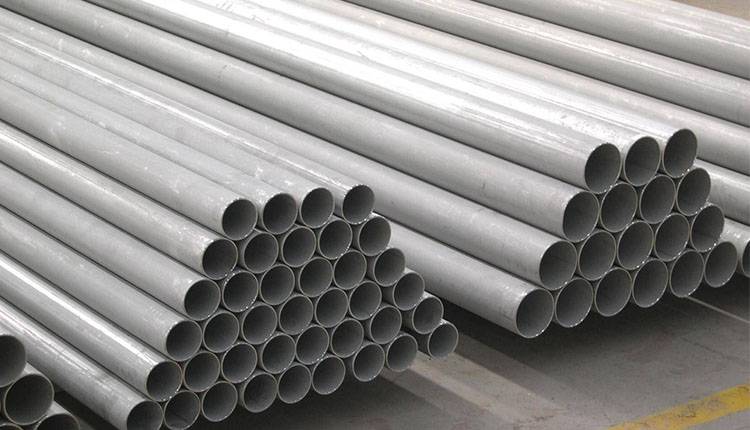
Nickel 201 is a commercially pure nickel alloy with a minimum of 99.0% nickel. It contains very low amounts of carbon (≤0.15%), iron (≤0.40%), copper (≤0.30%), manganese (≤0.35%), silicon (≤0.35%), and sulfur (≤0.03%). This composition provides excellent corrosion resistance in reducing environments. The low carbon content improves weldability and minimizes susceptibility to sensitization. Trace impurities are controlled to ensure uniform performance. Nickel content ensures durability against a wide range of chemicals. The balanced composition allows both hot and cold working without significant loss of properties. It is suitable for components where chemical purity is critical.
Nickel 201 pipes exhibit excellent mechanical properties, including tensile strength ranging from 345–690 MPa. Yield strength is approximately 100–380 MPa depending on annealing. The elongation in 50 mm is usually around 40–50%, indicating high ductility. Hardness ranges from 70–140 HB depending on processing. The alloy retains good strength at elevated temperatures up to 600°C. Low-temperature toughness is also excellent, enabling use in cryogenic conditions. Nickel 201 has good fatigue and impact resistance, making it suitable for dynamic applications. Its workability ensures ease of fabrication and forming into complex shapes.
Nickel 201 pipes are highly resistant to reducing acids such as sulfuric, acetic, and phosphoric acids. They resist alkalis and caustic solutions and perform well in non-oxidizing environments. The alloy is not suitable for strong oxidizing acids, such as nitric acid. Nickel 201 also resists corrosion in organic and inorganic chemical media. Its uniform corrosion resistance allows for long service life in chemical plants. The material performs well under high-velocity fluids and minimal erosion. Resistance to pitting and crevice corrosion ensures safe operation in aggressive applications. These properties make it highly reliable for critical piping systems.
| Property | Specification / Range |
|---|---|
| Alloy Type | Nickel 201 (Commercially Pure Nickel) |
| Standards | ASTM B161, ASTM B162, ASTM B163, ASME SB161 |
| Pipe Type | Seamless & Welded |
| Nominal Diameter | 1/2" to 24" |
| Wall Thickness | Schedule 10 to Schedule 160 |
| Length | 6m, 12m, or as per requirement |
| Surface Finish | Polished, Pickled & Passivated |
| End Connections | Beveled Ends, Plain Ends, Threaded Ends |
| Temperature Range | -200°C to 600°C |
| Corrosion Resistance | Excellent in reducing acids, caustic solutions, and alkaline environments |
| Mechanical Properties | Tensile Strength: 345–690 MPa, Yield Strength: 100–380 MPa, Elongation: 40–50% |
| Fabrication | Weldable, Cold Bendable, Machinable with proper tools |
| Special Features | Non-magnetic, Resistant to pitting & crevice corrosion, Durable at high and low temperatures |
Nickel 201 pipes are easily fabricated using standard techniques such as welding, bending, and forming. TIG, MIG, and arc welding are commonly employed. Due to low carbon content, preheating is not generally required. Cold working and bending can be performed without risk of cracking. Machining is straightforward, though care should be taken to minimize work hardening. Annealing after significant cold working restores ductility. Proper filler materials such as Nickel 200 or 201 ensure joint integrity during welding. Forming and rolling operations are simple, making Nickel 201 pipes versatile in complex assemblies.
Nickel 201 pipes are available in seamless and welded forms. Standard nominal diameters range from 1/2" to 24". Wall thickness varies according to ASTM B162 or ASME B36.19 specifications. Lengths are typically supplied in 6 m or 12 m, but custom lengths are also available. Standard schedules from 10 to 160 ensure compatibility across different applications. End connections include beveled ends, plain ends, and threaded ends. Dimensional accuracy ensures proper fit in chemical and industrial installations. Both ASTM and ASME standards govern these dimensions to maintain uniformity. Nickel 201 pipes can also be supplied in precision tolerances for critical applications.
Nickel 201 pipes are typically supplied in the annealed condition. They can be solution annealed at 1050°C followed by rapid cooling to restore ductility. Stress-relief treatments may be applied after cold working to prevent distortion. Unlike age-hardenable alloys, Nickel 201 does not require complex heat treatment. Thermal stability ensures that mechanical and corrosion properties are preserved at elevated temperatures. Heat treatment also ensures uniform performance across fabricated systems. It helps to remove residual stresses from welding and forming. Proper heat treatment enhances both toughness and corrosion resistance.
| Element | Percentage (%) |
|---|---|
| Nickel (Ni) | ≥99.0 |
| Carbon (C) | ≤0.15 |
| Iron (Fe) | ≤0.40 |
| Copper (Cu) | ≤0.30 |
| Manganese (Mn) | ≤0.35 |
| Silicon (Si) | ≤0.35 |
| Sulfur (S) | ≤0.03 |
| Other Impurities | ≤0.05 |
| Property | Value / Range |
|---|---|
| Tensile Strength | 345–690 MPa |
| Yield Strength (0.2% offset) | 100–380 MPa |
| Elongation (50 mm) | 40–50% |
| Hardness | 70–140 HB |
| Impact Resistance | Excellent at room and sub-zero temperatures |
| Fatigue Strength | High, suitable for dynamic and high-pressure applications |
| Operating Temperature Range | -200°C to 600°C |
| Workability | Good; easily welded, formed, and machined with proper tools |
| Nominal Pipe Size (NPS) | Outside Diameter (OD) mm | Wall Thickness (Schedule) | Weight per Meter (kg/m) |
|---|---|---|---|
| 1/2" | 21.3 | Sch 10 / Sch 40 / Sch 80 | 1.2 / 1.6 / 2.1 |
| 3/4" | 26.7 | Sch 10 / Sch 40 / Sch 80 | 1.5 / 2.0 / 2.7 |
| 1" | 33.4 | Sch 10 / Sch 40 / Sch 80 | 2.0 / 2.7 / 3.5 |
| 1 1/2" | 48.3 | Sch 10 / Sch 40 / Sch 80 | 3.0 / 4.0 / 5.5 |
| 2" | 60.3 | Sch 10 / Sch 40 / Sch 80 | 4.0 / 5.4 / 7.4 |
| 3" | 88.9 | Sch 10 / Sch 40 / Sch 80 | 6.8 / 9.6 / 13.2 |
| 4" | 114.3 | Sch 10 / Sch 40 / Sch 80 | 10.8 / 15.2 / 20.8 |
| 6" | 168.3 | Sch 10 / Sch 40 / Sch 80 | 17.5 / 25.5 / 35.8 |
| 8" | 219.1 | Sch 10 / Sch 40 / Sch 80 | 28.0 / 40.8 / 57.2 |
| 10" | 273.0 | Sch 10 / Sch 40 / Sch 80 | 41.5 / 60.5 / 84.6 |
| 12" | 323.9 | Sch 10 / Sch 40 / Sch 80 | 57.0 / 82.5 / 115.0 |
| 14" | 355.6 | Sch 10 / Sch 40 / Sch 80 | 67.0 / 97.0 / 135.0 |
| 16" | 406.4 | Sch 10 / Sch 40 / Sch 80 | 85.0 / 122.0 / 170.0 |
| 18" | 457.0 | Sch 10 / Sch 40 / Sch 80 | 105.0 / 150.0 / 210.0 |
| 20" | 508.0 | Sch 10 / Sch 40 / Sch 80 | 128.0 / 182.0 / 256.0 |
| 24" | 609.6 | Sch 10 / Sch 40 / Sch 80 | 184.0 / 262.0 / 368.0 |
| Standard | Equivalent Grade |
|---|---|
| ASTM / ASME | ASTM B161, ASTM B162, ASTM B163, ASME SB161 |
| UNS | UNS N02201 |
| ISO | ISO 17744 – Commercially Pure Nickel |
| EN | EN 2.4066 (Ni99Fe) |
| JIS | JIS NCF 201 |
| DIN | DIN 2.4066 |
| Other Designations | Nickel 200, UNS N02200, Commercially Pure Nickel |
Nickel 201 Pipe is a high-purity nickel alloy pipe known for excellent corrosion resistance, high strength, and good ductility. It is widely used in chemical, aerospace, and marine industries where resistance to reducing environments is required.
Nickel 201 Pipes are used in chemical processing equipment, heat exchangers, desalination plants, marine components, aerospace components, and other industries requiring resistance to reducing acids, alkalis, and caustic solutions.
Key features include outstanding corrosion resistance, high mechanical strength, excellent ductility, resistance to hydrogen embrittlement, and good performance at elevated temperatures.
The main composition of Nickel 201 Pipes includes: Nickel (99.0% min), Carbon (0.03% max), Iron (0.30% max), Copper (0.25% max), Manganese (0.35% max), and Sulfur (0.015% max).
Typical mechanical properties include: Tensile strength 550–750 MPa, Yield strength 150–300 MPa, Elongation 30–50%, and Hardness 90–120 HRB. These properties ensure durability and resistance to mechanical stress.
Nickel 201 Pipes are available in a wide range of diameters, wall thicknesses, and lengths. Custom sizes can also be manufactured according to project requirements, ensuring flexibility for various industrial applications.
Yes, Nickel 201 Pipes can be welded using conventional methods such as TIG, MIG, and resistance welding. Proper welding procedures are recommended to maintain corrosion resistance and mechanical properties.
Nickel 201 Pipes typically conform to ASTM B161 (Seamless Nickel Pipe) and ASTM B168 (Nickel Pipe fittings), ensuring high-quality material suitable for critical applications.
Nickel 201 Pipes have excellent resistance to corrosion from alkalis, caustic solutions, hydrogen sulfide, and reducing acids, making them ideal for harsh chemical environments.
Nickel 201 Pipes should be stored in a clean, dry area to avoid contamination or surface damage. Protective coatings or wrappings can be used to maintain surface quality during storage and transportation.
We export steel pipes and tubes to over 10297 countries worldwide, serving clients across Asia, Europe, the Middle East, Africa, Oceania, and the Americas. Our strong global logistics network ensures reliable delivery, quality assurance, and compliance with international standards.
Export Destinations Include:
Afghanistan, Albania, Andorra, Angola, Austria, Australia, Bahrain, Bangladesh,
Bhutan, Brazil, Brunei, Belarus, Belgium, Bulgaria, Cambodia, China, Cyprus,
Croatia, Czech Republic, Canada, Denmark, Estonia, Egypt, Finland, France,
Germany, Greece, Georgia, Hungary, Iceland, Ireland, Italy, Indonesia, Iran,
Iraq, Israel, Japan, Jordan, Kazakhstan, Kuwait, Kyrgyzstan, Lebanon, Latvia,
Latin America, Liechtenstein, Lithuania, Luxembourg, Malta, Madagascar, Mexico,
Moldova, Monaco, Malaysia, Maldives, Mongolia, Myanmar (Burma), Nepal,
New Zealand, North Korea, Netherlands, Norway, Nigeria, Oman, Poland, Portugal,
Pakistan, Palestine, Philippines, Qatar, Russia, Romania, San Marino,
Serbia and Montenegro, Slovakia, Slovenia, Spain, Sweden, Switzerland,
Saudi Arabia, Singapore, South Korea, South Africa, Sri Lanka, Sudan, Syria,
Taiwan, Tanzania, Tajikistan, Thailand, Turkey, Turkmenistan, Ukraine,
United Kingdom, United Arab Emirates (UAE), Uzbekistan, Venezuela, Vietnam,
Yemen, and more.

